Why Non‑Surgical Rejuvenation Is Gaining Momentum
Recent data illustrate an unmistakable surge in minimally invasive facial aesthetics. In 2020 more than 13 million procedures were performed in the United States, and a 2023 ASPS report records over 2.5 million botulinum toxin injections alone, underscoring a 14 % rise in aesthetic treatments nationwide. Patients are drawn to the safety profile of non‑surgical options: neuromodulators and dermal fillers carry complication rates below 0.5 % when administered by board‑certified physicians, and most interventions entail only mild bruising or temporary redness, allowing patients to resume daily activities immediately. The ideal candidate is typically a health‑conscious adult between 35 and 55 years old who seeks subtle, natural‑looking restoration of volume and tone without the downtime or risks associated with surgery. This demographic often presents with early‑stage skin laxity, fine lines, or volume loss and values personalized, expert‑driven treatment plans that blend injectables, energy‑based tightening, and advanced skin resurfacing for lasting confidence.
Top Non‑Surgical Options for Facial Rejuvenation
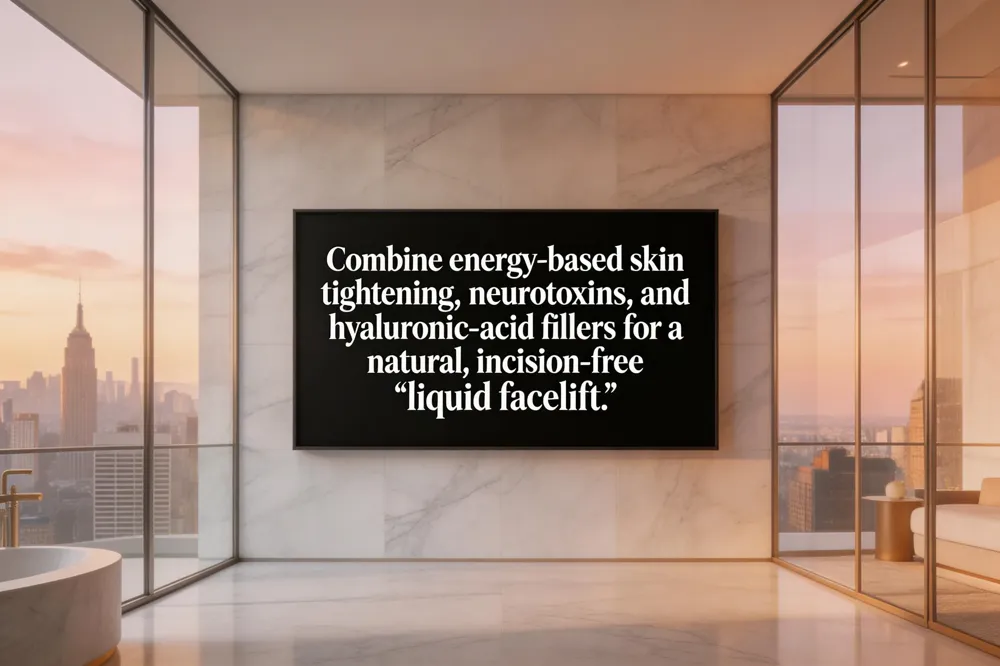 For patients seeking a refreshed look without incisions, the leading non‑surgical facial rejuvenation treatments combine three pillars: energy‑based skin tightening, injectable neurotoxins, and volume restoration with fillers.
Energy‑based skin tightening – Modalities such as Ultherapy (focused ultrasound), radio‑frequency platforms (Thermage, FaceTite, Ellman Pellevé, Infini), and non‑ablative fractional lasers (CO₂, erbium:YAG, Fraxel) heat deep dermal layers, stimulating neocollagenesis and elastin remodeling. The result is a subtle lift of the jawline, neck, and brow, with improved firmness and texture that can be maintained with annual or biennial maintenance sessions.
Injectable neurotoxins – Botulinum toxin type A (Botox®, Dysport®) remains the most performed minimally invasive facial procedure in the United States. By temporarily relaxing targeted facial muscles, neurotoxins smooth dynamic lines such as crow’s feet, frown lines, and forehead creases within 3–5 days, with effects lasting 3–4 months. When administered by board‑certified physicians, complication rates are under 0.5 %, making it a safe, low‑downtime option for natural‑looking wrinkle reduction.
Volume restoration with fillers – Hyaluronic‑acid dermal fillers (Juvederm®, Restylane®, Voluma®, Sculptra®, Radiesse®) instantly replenish lost volume in sunken cheeks, nasolabial folds, and thin lips. Depending on the product and treatment area, results persist from 6 months to several years, while newer collagen‑stimulating agents continue to improve skin quality beyond the initial injection.
Answer to the key question – What are the top non‑surgical options for facial rejuvenation?
For patients seeking a refreshed look without incisions, the leading non‑surgical facial rejuvenation treatments combine energy‑based skin tightening, injectable neurotoxins, and volume restoration. Focused‑ultrasound Ultherapy and radio‑frequency Thermage lift and tighten the jawline, neck, and brow by stimulating deep collagen remodeling. Fractional laser technologies such as Fraxel CO₂ and broad‑spectrum laser resurfacing improve texture, tone, and fine lines while encouraging new skin growth. Microneedling with PRP and customized chemical peels gently exfoliate and boost collagen for a smoother, radiant complexion. Finally, strategically placed Botox or Dysport relax dynamic wrinkles and dermal fillers (Juvederm, Restylane, Voluma) restore lost volume, delivering a natural, “liquid facelift” result.
Most Effective Treatments in 2025
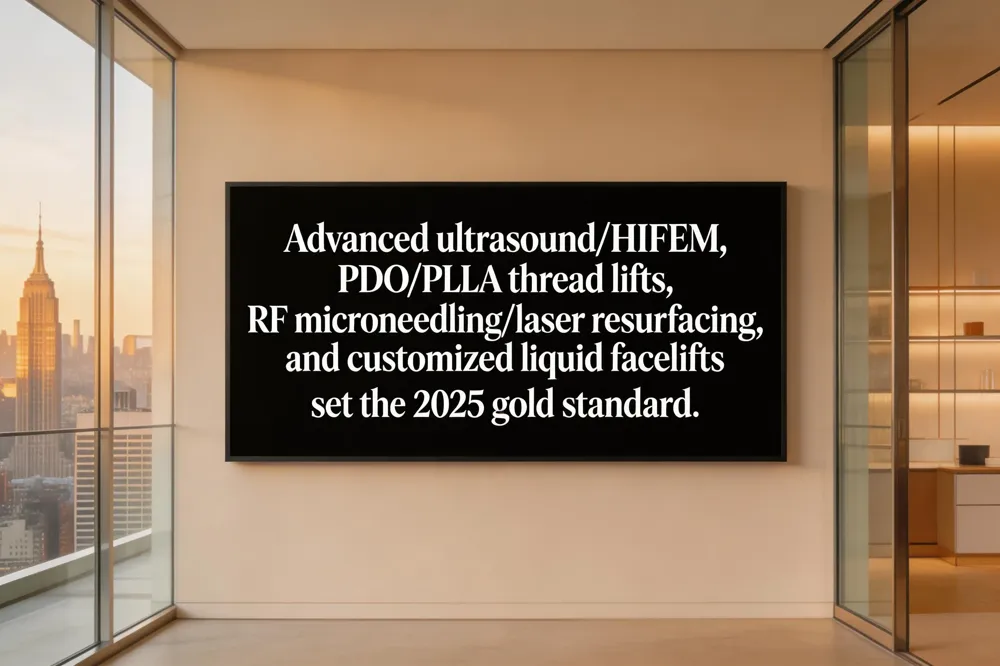 In 2025 the most effective non‑surgical facial treatments combine cutting‑edge energy‑based technologies with precision injectable techniques to lift, tighten, and rejuvenate the skin without incision. Advanced ultrasound and HIFEM devices—such as next‑generation Ultherapy and proprietary high‑intensity focused electromagnetic platforms—deliver deep thermal stimulation that triggers robust collagen remodeling, offering a subtle, natural lift that can endure 12‑18 months while preserving facial expression.
Thread lifts with PDO/PLLA sutures provide immediate structural support to sagging mid‑face and jawline tissue; the biodegradable sutures also inc a cascade of neocollagenesis, resulting in a gradual, long‑lasting improvement that typically lasts 12‑24 months with minimal downtime.
RF microneedling and laser resurfacing address texture, tone, and fine lines. Microneedling micro inject radiofrequency energy into the dermis, creating micro‑injuries that accelerate elastin and collagen synthesis, while fractional CO₂ and erbium:YAG lasers remove damaged epidermal layers and stimulate deeper remodeling for smoother, firmer skin.
Customized liquid facelift—a tailored blend of hyaluronic‑acid fillers, collagen‑stimulating agents, and neuromodulators—restores lost volume, defines contours, and softens dynamic wrinkles. By mapping each patient’s unique anatomy, clinicians achieve elegant, natural‑looking results that can be maintained with periodic touch‑ups.
Together, these four modalities represent the gold standard in non‑surgical facial rejuvenation for 2025, delivering luxurious outcomes with rapid recovery, low complication rates, and a personalized approach that restores confidence while honoring each client’s individual beauty.
How Long Do Results Last?
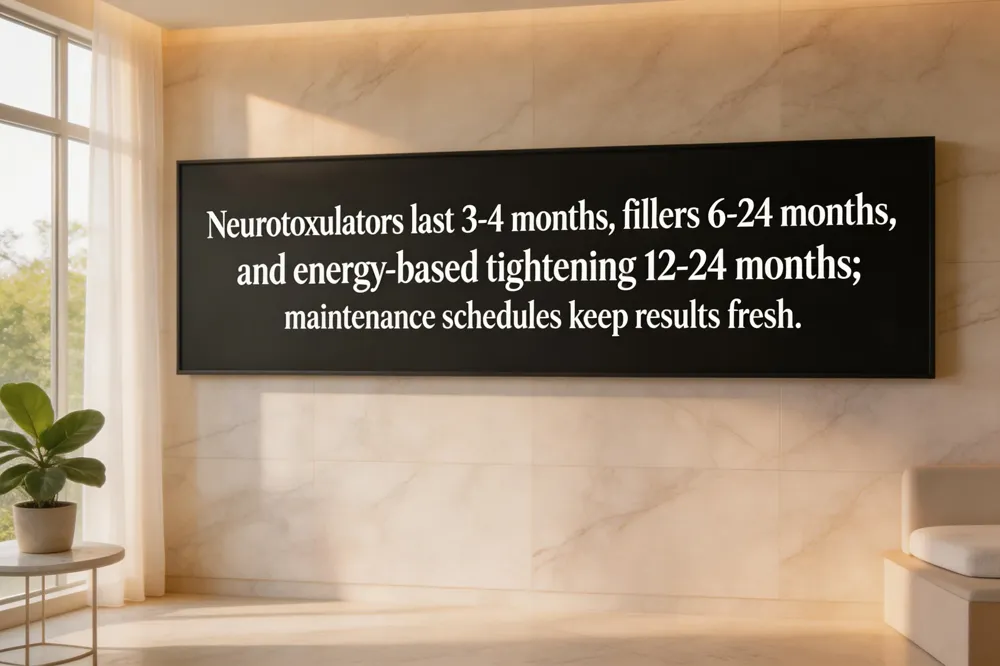 Surgical facelifts deliver the most durable rejuvenation, with structural repositioning of tissue and deep‑layer tightening that often remains evident for a decade or longer; patients typically appear ten years younger than they would without intervention. In contrast, non‑surgical modalities—neuromodulators, hyaluronic‑acid fillers, laser resurfacing, radiofrequency tightening, and microneedling—provide incremental improvements that wane over months to a few years. Botox or Dysport relax dynamic lines for three to four months, while hyaluronic‑acid fillers sustain volume from six months up to two years, depending on product and treatment area. Energy‑based skin‑tightening and laser resurfacing stimulate collagen remodeling, delivering gradual firmness that may persist 12–24 months before maintenance is required.
Because non‑surgical outcomes are temporary, clinicians recommend a personalized maintenance schedule: neuromodulators every three to four months, fillers semi‑annually, and periodic laser or RF sessions annually. Setting realistic patient expectations is essential; while non‑surgical treatments can subtly soften signs of aging, they do not replace the profound, long‑term lift achieved by surgery.
Which procedure can reduce the appearance of facial aging by up to ten years? The results of a facelift are long‑lasting, often enduring for ten years or more. While natural aging continues, patients typically look significantly younger than they would without the procedure.
Treatments That Can Make a Face Appear Twenty Years Younger
 A strategic blend of advanced skin resurfacing, precise eyelid rejuvenation, and volume restoration can erase two decades of aging.
Laser Resurfacing – Fractional CO₂ or erbium:YAG lasers remove damaged epidermal layers while heating the dermis to trigger collagen remodeling. Patients typically see smoother texture, tighter tone, and a noticeable lift within weeks, with results lasting up to a year when combined with proper skincare.
Blepharoplasty (Eyelid Lift) – By excising excess skin and fat and or upper eyelids or tightening the lower lid, this procedure restores youthful elasticity and opens the gaze. The refined, natural outcome eliminates hooding and under‑eye hollows, instantly rejuvenating the mid‑face.
Facial Fat Transfer – Autologous fat harvested via gentle liposuction is purified and re‑injected into sunken cheeks, temples, and nasolabial folds. Unlike hyaluronic fillers, transferred fat integrates with native tissue, offering lasting volume and improved contour for up to several years.
Which treatments can make a face look twenty years younger?
- Laser Resurfacing – effectively repairs and rejuvenates aged skin.
- Blepharoplasty (Eyelid Lift) – restores elasticity and lifts drooping eyelids.
- Facial Fat Transfer – restores lost volume for a more youthful contour.
Safety, Recovery, and Choosing the Right Plan
 A nonsurgical facelift prioritizes patient safety while delivering natural‑looking rejuvenation. Common side effects—bruising, swelling, redness, and mild dryness—are typically transient and resolve within a few days for injectables and a week for laser or chemical peel procedures. Rare complications such as infection, prolonged bruising, or systemic reactions (fever, headache, nausea, rash) occur in less than 0.5 % of cases when treatments are performed by board‑certified physicians.
Recovery timelines differ by modality: neuromodulator injections (Botox®, Dysport®) allow immediate return to daily activities; hyaluronic‑acid fillers may cause mild swelling for 24–48 hours; chemical peels require 1–3 days of mild redness; laser resurfacing or fractional CO₂ treatments may entail 3–7 days of peeling and tightness; microneedling and radiofrequency tightening typically involve only brief erythema lasting 24–48 hours.
Because facial aging manifests as a combination of volume loss, dynamic lines, and skin laxity, personalized combination protocols yield the most durable, elegant results. A typical plan might pair neuromodulators for dynamic wrinkles, hyaluronic‑acid fillers for nasolabial folds and cheek volume, and an energy‑based tightening (Ultherapy, RF, or non‑ablative laser to stimulate collagen. Tailoring the sequence and interval of each treatment—often spacing injectables 2–4 weeks apart from laser sessions—optimizes safety, minimizes downtime, and sustains a natural, youthful appearance.
Your Path to a Refined, Youthful Appearance
At our boutique practice, every non‑surgical rejuvenation plan is crafted to enhance your unique facial architecture while preserving the subtle, natural elegance you desire. By selecting only board‑certified physicians, we guarantee expertise in the full spectrum of minimally invasive modalities—neuromodulators, hyaluronic‑acid fillers, laser resurfacing, radiofrequency tightening, and advanced peels—each performed with meticulous technique to minimize downtime and adverse events. Our clinicians assess skin laxity, volume loss, and dynamic lines, then tailor a combination of injectables and energy‑based treatments that yields harmonious, age‑defying results without the “over‑filled” look. During a private, no‑pressure consultation we discuss your aesthetic goals, review realistic expectations, and outline a personalized schedule that aligns with your lifestyle. This collaborative approach ensures you receive the most effective, evidence‑based interventions while enjoying the confidence‑boosting transformation that a refined, youthful appearance brings. Post‑procedure, we provide detailed after‑care instructions and schedule periodic follow‑up visits to monitor collagen remodeling, allowing timely touch‑ups that maintain the natural glow throughout the year lasting results.