Introduction
Body sculpting offers a spectrum of options to refine stubborn fat deposits and enhance skin tone, ranging from traditional surgical techniques to cutting‑edge non‑invasive modalities. Surgical approaches—such as liposuction, power‑assisted liposuction, and skin‑tightening adjuncts like Renuvion—provide immediate, dramatic contouring by physically removing subcutaneous fat and, when indicated, excess skin. In contrast, non‑surgical treatments—including cryolipolysis (CoolSculpting), radio‑frequency, laser, ultrasound, and injectable agents such as semaglutide—rely on controlled thermal or chemical mechanisms to induce gradual fat cell apoptosis while preserving surrounding tissue. Selecting a board‑certified plastic surgeon with documented experience in the chosen technique is paramount; these specialists adhere to rigorous ASPS standards, operate in accredited facilities, and tailor treatment plans to each patient’s anatomy and aesthetic goals, thereby maximizing safety and delivering natural‑looking, lasting results.
Surgical vs. Non‑Surgical Body Sculpting: Choosing the Best Method
| Method | Ideal Candidates | Volume Removal | Downtime | Pros | Cons | Typical Recovery |
|---|---|---|---|---|---|---|
| Power‑Assisted Liposuction | Large‑volume, precise sculpting | High (up to 5 L) | 1‑2 weeks | Immediate dramatic results, single session | Anesthesia, surgical risks, scar | 4‑6 weeks for full swelling resolution |
| CoolSculpting (Cryolipolysis) | Modest, stubborn pockets | Low‑moderate | None (daily activities) | No anesthesia, minimal downtime, non‑invasive | Multiple sessions needed, slower results | 2‑4 months for final contour |
| Laser (SculpSure) | Small‑to‑moderate areas, skin tightening | Low‑moderate | None to minimal | Precise targeting, some skin tightening | Requires several sessions, cost | 2‑3 months |
| Ultrasound (UltraShape) | Focused fat reduction, mild skin tightening | Low‑moderate | None | Non‑invasive, no anesthesia | Limited to certain areas, multiple sessions | 2‑4 months |
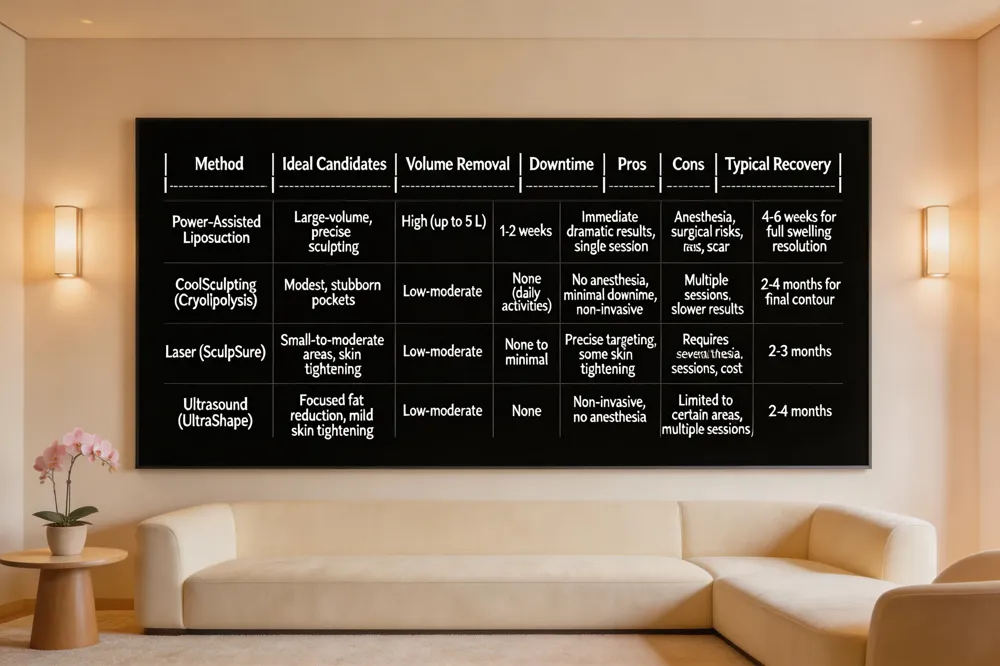 When selecting a body‑sculpting plan, a board‑certified plastic surgeon first evaluates fat volume, skin laxity, and the patient’s downtime tolerance. Liposuction and power‑assisted variations excel at large‑volume removal; a single surgical session yields immediate, dramatic contouring, especially when paired with a body lift for excess skin. Cryolipolysis (CoolSculpting) and laser‑based options such as SculpSure provide a non‑invasive alternative, freezing or heating targeted fat cells for gradual reduction over 2‑4 months with virtually no recovery.
Best body sculpting method? It is individualized: power‑assisted liposuction is the gold standard for extensive, precise sculpting, while CoolSculpting or laser treatments suit modest, stubborn pockets and patients seeking minimal downtime.
Liposuction vs CoolSculpting for abdomen? Liposuction delivers instant, dramatic flattening with a 1‑2‑week recovery; CoolSculpting offers a slower, scar‑free contour over months, ideal for those unable or unwilling to undergo surgery.
Pros and cons: Surgical removal provides rapid, lasting results but involves anesthesia and recovery; non‑surgical methods are low‑risk, require multiple sessions, and yield subtler changes.
CoolSculpting vs liposuction pros and cons: CoolSculpting offers no anesthesia, minimal downtime, and discreet treatment, yet needs several sessions for comparable contouring. Liposuction offers immediate, dramatic outcomes in one visit but carries surgical risks and a brief downtime.
Best non‑surgical body contouring procedure? CoolSculpting (cryolipolysis) remains the most studied, FDA‑cleared option, delivering reliable fat reduction with minimal discomfort, while laser (SculpSure) and ultrasound (UltraShape) serve as effective alternatives for select patients.
Non‑Invasive Fat‑Reduction Technologies and Their Costs
| Technology | Mechanism | Session Cost (US) | Typical Sessions Needed | Total Cost Range | FDA Status |
|---|---|---|---|---|---|
| Cryolipolysis (CoolSculpting) | Controlled cooling to induce adipocyte apoptosis | $300‑$1,500 (national) / $500‑$2,000 (NYC) | 3‑6 | $2,500‑$10,000+ | FDA‑cleared |
| Radio‑Frequency (TruSculpt®) | Deep tissue heating (~120 °F) to remodel fat | $400‑$1,200 | 4‑6 | $2,000‑$7,200 | FDA‑cleared |
| Laser (SculpSure) | Targeted thermal energy to disrupt fat membranes | $500‑$1,300 | 3‑5 | $1,500‑$6,500 | FDA‑cleared |
| Therapeutic Ultrasound (UltraShape) | Focused acoustic waves to rupture adipocytes | $350‑$1,100 | 4‑8 | $1,400‑$8,800 | FDA‑cleared |
| Low‑Level Red‑Light (UltraSlim) | Micro‑channel creation to shrink fat cells | $200‑$800 | 6‑10 | $1,200‑$8,000 | Not FDA‑cleared for fat reduction |
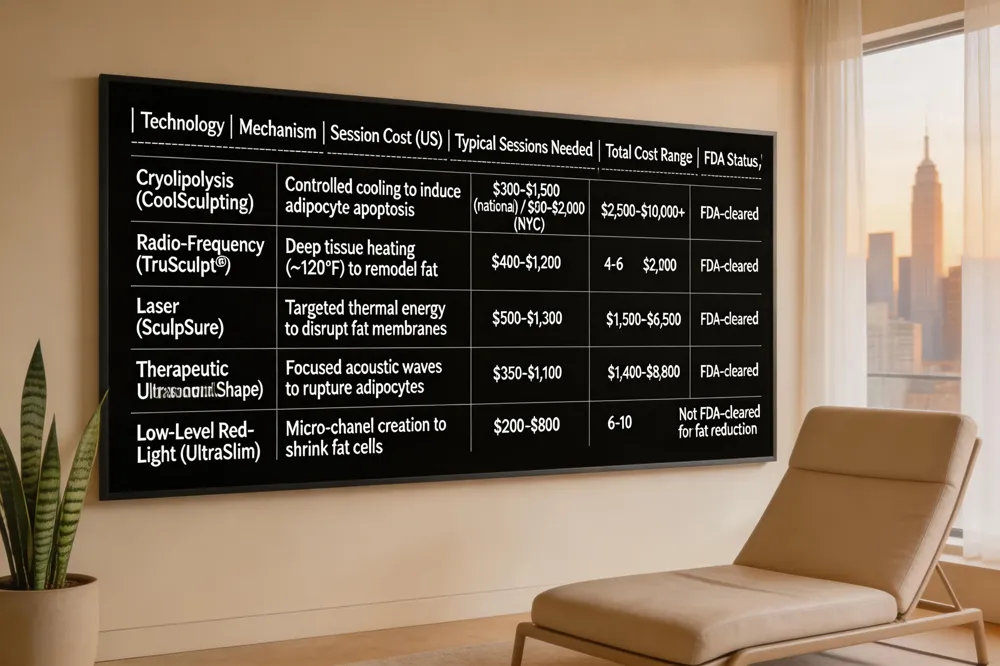 Cryolipolysis (CoolSculpting) mechanism – Cryolipolysis applies controlled cooling (‑11 °C to –5 °C) to crystallize adipocytes while sparing skin, nerves, and muscle. The frozen cells undergo apoptosis and are cleared via the lymphatic system, yielding a 20‑25 % thickness reduction after 3‑4 months.
**RF devices heat deep tissue to ~120 °F, laser platforms (e.g., SculpSure deliver precise thermal energy to disrupt fat membranes; therapeutic ultrasound (UltraShape uses focused acoustic waves to rupture adipocytes; low‑level red‑light therapy (UltraSlim creates micro‑channels that shrink fat cells and improve texture.
All listed technologies are FDA‑cleared for localized fat reduction – with a favorable safety record. Common transient effects include redness, mild swelling, bruising, or tingling, typically resolving within days. Serious complications are rare when performed by board‑certified surgeons in accredited facilities.
In the U.S., a single session ranges $300‑$1,500; in New York City (e.g., Madison Plastic Surgery) expect $500‑$2,000 per treatment – multiple sessions are usually required, bringing total investment to ** $2,500‑$10,000+**.
Madison Plastic Surgery in NYC offers FDA‑cleared CoolSculpting, RF (TruSculpt®), and laser options, with board‑certified physicians ensuring personalized, natural‑looking outcomes.
Patients praise gradual, natural improvements and minimal downtime; most report mild temporary discomfort and require 3‑6 sessions for optimal results.
Non‑surgical body contouring at home – At‑home devices lack FDA clearance and clinical calibration; they may offer superficial skin benefits but cannot match the fat‑cell elimination of professional treatments.
Do body sculpting machines work at home? – Home units provide modest tightening but limited efficacy; for durable, dramatic contouring, in‑office procedures remain the gold standard.
Patient Journey: Before‑and‑After Transformations and Real‑World Results
| Stage | Description | Expected Outcome | Timeline |
|---|---|---|---|
| Consultation | Board‑certified assessment, goal setting, treatment plan | Personalized roadmap, realistic expectations | 1 hour visit |
| Pre‑Procedure Prep | Labs, imaging, compression garment fitting | Optimized safety, baseline measurements | 1‑2 weeks before |
| Procedure (Surgical) | Power‑assisted liposuction ± body lift | Immediate contour change, possible scar | Same day |
| Procedure (Non‑Surgical) | CoolSculpting / Laser session | Gradual fat reduction per session | 2‑4 weeks per session |
| Recovery | Compression, activity modification, follow‑up | Swelling reduction, healing | 4‑6 weeks (surgical), 2‑4 months (non‑surgical) |
| Results | Final contour, 1‑3 inch circumference reduction | Natural‑looking silhouette | 3‑4 months (non‑surgical), 6‑8 weeks (surgical) |
| Maintenance | Nutrition, exercise, occasional touch‑ups | Long‑term result preservation | Ongoing |
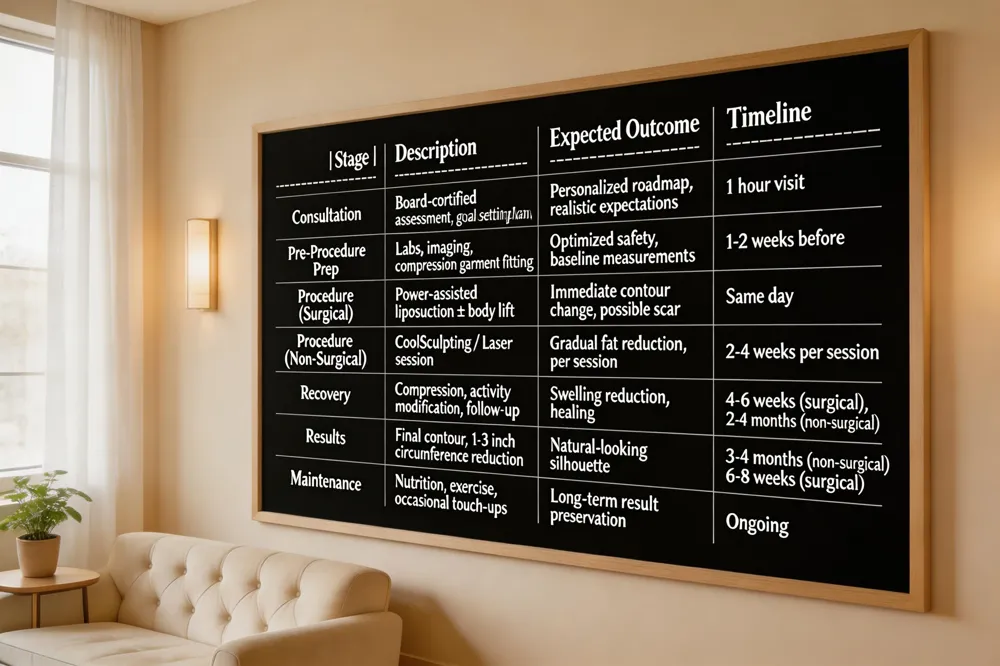 At Madison Plastic Surgery the journey starts with a comprehensive, board‑certified consultation where the surgeon maps each patient’s anatomy, sets realistic goals, and selects the optimal technique—whether power‑assisted liposuction, CoolSculpting, Renuvion, or injectable adjuncts such as Ozempic. Typical before‑and‑after outcomes show a smoother silhouette, 1–3‑inch reductions in waist or thigh circumference, and sharper definition of treated zones, all while preserving natural muscle tone. After the procedure patients wear properly fitted compression garments to limit swelling, bruising, and the risk of hematoma or seroma, and they receive a personalized after‑care plan that includes activity modification, nutrition guidance, and scheduled follow‑up visits. Managing expectations is key; results are gradual with non‑surgical options—fat loss becomes evident after 3‑4 weeks and final contouring at 3‑4 months—while surgical liposuction offers immediate contour improvement with a recovery period of 4‑6 weeks. Lifestyle integration—balanced diet, regular exercise, adequate hydration, and sleep—ensures the refined results endure long‑term. In response to common questions: CoolSculpting can trim localized fat but is not a 20‑pound weight‑loss solution; at‑home devices provide modest skin‑tightening but lack the power and FDA clearance for meaningful contouring, making in‑office, physician‑supervised treatments the gold standard for elegant, durable outcomes.
Financial Planning and Regional Pricing for Sculpting Procedures
| Procedure | NYC Session Cost | Typical Series Cost | Additional Fees | Financing Options |
|---|---|---|---|---|
| CoolSculpting (abdomen) | $600‑$2,200 | $1,200‑$6,600 (2‑3 sessions) | Consultation ($150), compression garments ($200) | Interest‑free credit, 12‑month plans |
| Emsculpt (muscle toning) | $800‑$2,500 | $2,400‑$7,500 (3‑4 sessions) | Facility fee ($250) | In‑house financing, third‑party loans |
| Power‑Assisted Liposuction | $6,000‑$12,000 (incl. anesthesia) | One‑time | Operating room fee, postoperative garments | Medical credit lines, payment plans |
| Tummy Tuck (abdominoplasty) | $8,000‑$15,000 | One‑time | Hospital stay, lab tests | Flexible financing, bundled packages |
| Combined Package (Surgical + Non‑Surgical) | Custom | Custom | May include multiple‑session discount | Tailored payment schedule |
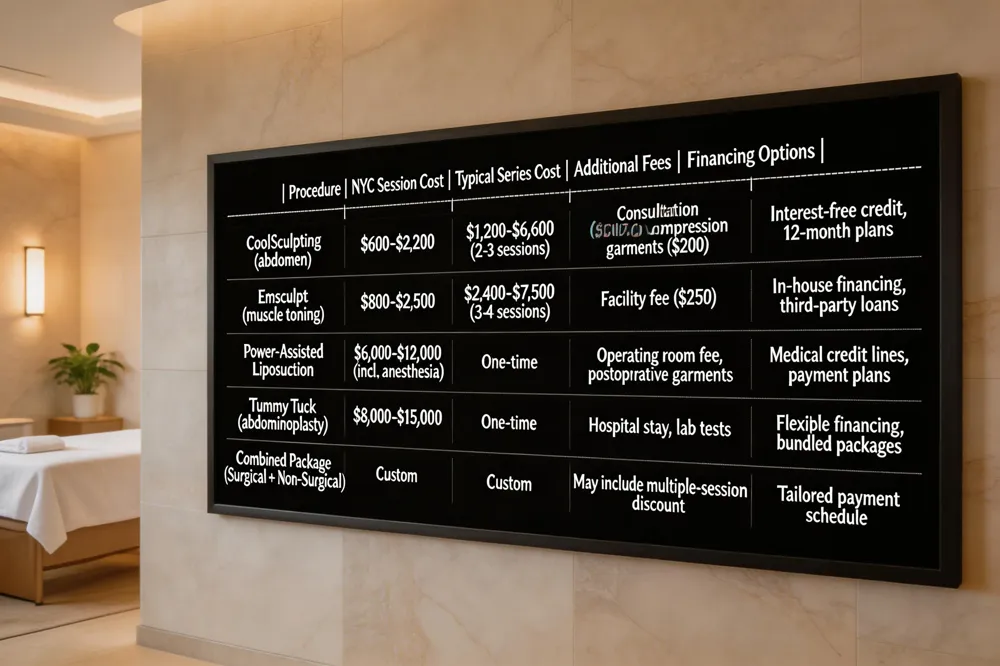 When budgeting for body sculpting, cost varies by city, technology, and treatment scope. In New York City, non‑invasive abdominal sculpting at Madison Plastic Surgery ranges from $600 to $2,200 per session, depending on whether CoolSculpting®, Emsculpt®, or other modalities are used and on the treatment area’s size. A typical series of two to three sessions totals $1,200–$6,600, while surgical liposuction of the stomach starts around $6,000 and can exceed $12,000 once anesthesia, facility fees, and postoperative care are added. To ease the financial burden, many practices offer package discounts that lower per‑session rates for multi‑treatment plans, as well as flexible financing options and interest‑free credit lines. Additional fees may include a consultation charge, which is often applied toward the total cost, and after‑care expenses such as compression garments or follow‑up visits. For patients seeking convenience, a quick search for “body sculpting near me” points to boutique clinics like Madison Plastic Surgery in Manhattan, where board‑certified surgeons deliver both surgical (liposuction, tummy tuck) and non‑surgical (CoolSculpting, Ultra‑Sculpt) services in a luxurious setting. The benefits of body sculpting—precise fat reduction, minimal downtime, and natural‑looking,—make it a compelling investment for those desiring refined, elegant results while maintaining a healthy lifestyle.
Safety, Risks, and Home Solutions in Body Sculpting
| Aspect | In‑Clinic (Professional) | At‑Home Devices | Risks | Mitigation |
|---|---|---|---|---|
| Efficacy | Clinically proven fat reduction, calibrated dosing | Limited skin tightening, minimal fat loss | Sub‑optimal results | Choose FDA‑cleared devices, realistic expectations |
| Safety | FDA‑cleared, monitored by board‑certified surgeon | Often non‑FDA cleared, DIY use | Burns, nerve injury, paradoxical adipose hyperplasia | Professional supervision, proper training |
| Downtime | Minimal to moderate (depends on procedure) | None | None | Follow after‑care protocols |
| Cost | Higher per session but lasting results | Lower upfront cost | Potentially higher long‑term cost due to inefficiency | Evaluate total cost vs. outcome |
| Comfort | Controlled environment, pain management | Self‑administered, variable comfort | Discomfort, improper technique | Use manufacturer guidelines, start with low settings |
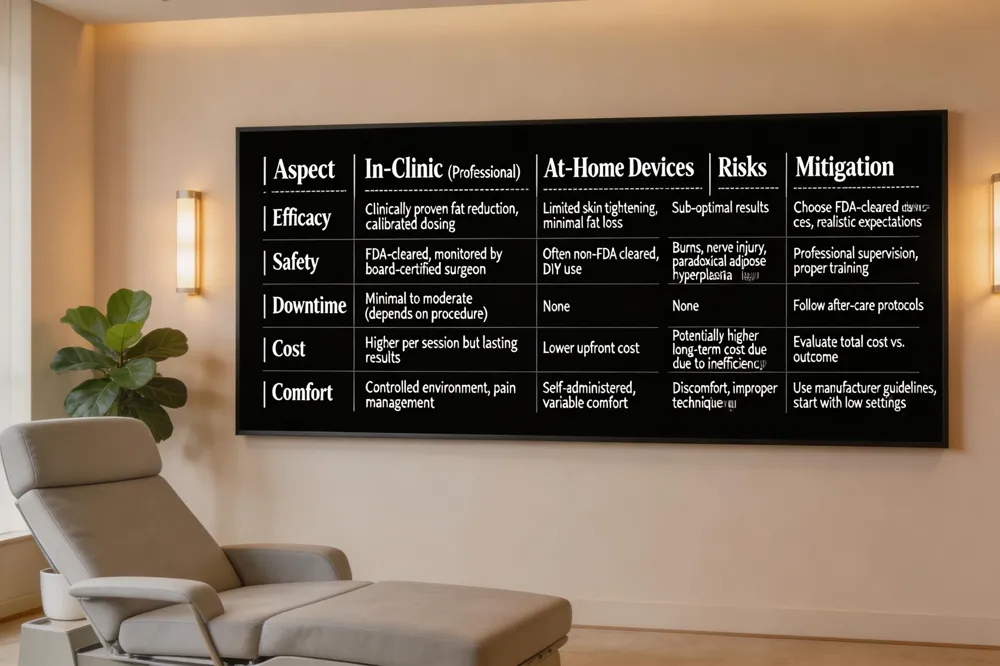 Is body sculpting dangerous? When performed by a board‑certified plastic surgeon in an accredited facility, body sculpting is largely safe. Patients commonly experience mild, self‑resolving effects such as bruising, swelling, temporary numbness, or redness. Rare but more serious complications—nerve irritation, skin irregularities, infection, bleeding, or paradoxical adipose hyperplasia in cryolipolysis—are minimized by selecting FDA‑cleared technologies, confirming candidacy, and adhering to pre‑ and post‑procedure protocols. Choosing a reputable boutique practice ensures personalized care and natural, elegant outcomes.
Benefits of body sculpting at home: Home devices provide the convenience of treating multiple areas—waist, thighs, jawline—on your schedule, eliminating travel and time off work. An upfront investment can be cost‑effective versus multiple in‑office sessions, and users can adjust session frequency and intensity to match personal comfort and goals. Results are modest and temporary, yet many patients value the immediate access to non‑invasive technology for maintenance between professional treatments.
Non‑surgical body contouring at home: Most at‑home vacuum or laser kits lack FDA clearance for meaningful fat reduction and may cause burns, bruising, or nerve injury if misused. In‑clinic procedures such as CoolSculpting, radio‑frequency, or ultrasound employ calibrated energy, real‑time monitoring, and expert staff who tailor protocols to individual anatomy and combine skin‑tightening or lymphatic therapies for lasting results. While home devices may offer mild, short‑lived skin texture improvements, they cannot match the safety, predictability, and natural aesthetic refinements delivered by a qualified surgeon.
Conclusion
When choosing a body‑sculpting pathway, the most important factors are candidacy, desired volume, and tolerance for downtime. Surgical options such as liposuction deliver immediate, dramatic contouring for larger fat deposits, while non‑invasive technologies—cryolipolysis (CoolSculpting), radiofrequency, laser, and ultrasound—offer modest, gradual reductions with little to no recovery time. Across all modalities, safety and optimal outcomes hinge on selecting a board‑certified plastic surgeon who has demonstrable experience with the specific technique and practices in an accredited facility. A personalized treatment plan—crafted after a thorough medical review, realistic goal setting, and discussion of lifestyle maintenance—ensures natural‑looking results that enhance confidence without compromising health. Prospective patients are encouraged to schedule a detailed consultation so that a tailored sculpting strategy can be designed, aligning aesthetic aspirations with the highest standards of surgical mastery and patient care.