Why Consider a Mommy Makeover?
Pregnancy and breastfeeding often leave lasting physical changes—diastasis recti, loose abdominal skin, loss of breast volume, and stubborn fat deposits—that cannot be fully corrected by diet or exercise alone. A thoughtfully staged mommy makeover addresses these issues in a single, expertly coordinated surgical plan, restoring a firm midsection, uplifted breasts, and a smoother silhouette. Beyond the physical transformation, many mothers experience a profound emotional boost: renewed confidence, a more positive body image, and a smoother psychological transition into motherhood. While non‑surgical options such as laser tightening or injectable treatments can modestly improve skin texture, they lack the capacity to repair muscle separation or remove excess skin. Therefore, for women seeking lasting, natural‑looking results, a personalized mommy makeover offers the most comprehensive solution.
Eligibility and Timing for a Mommy Makeover
Eligibility & Timing Summary
| Requirement | Details |
|---|---|
| Post‑delivery interval | Minimum 6 months after birth to allow abdominal tissue healing and uterine involution. |
| Health status | Excellent overall health; cardiovascular and pulmonary fitness confirmed by medical evaluation. |
| Smoking cessation | Quit at least 3 weeks (ideally 6 weeks) before surgery. |
| Weight stability | Within ~25 lb of desired post‑pregnancy weight; stable, non‑pregnant status. |
| Breastfeeding | Completed or ≥6 weeks after weaning. |
| Pregnancy plans | No planned pregnancy for at least 6 months post‑op to preserve results. |
| Medical conditions | Well‑controlled diabetes, no active melanoma (treated prior to surgery). |
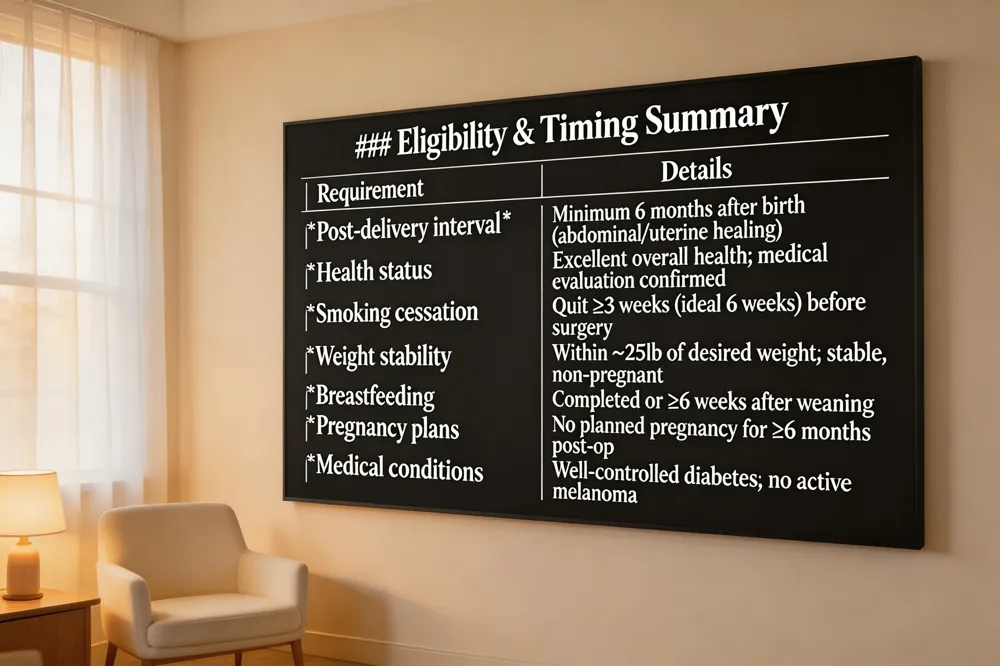 Board‑certified plastic surgeons, guided by the American Society of Plastic Surgeons (ASPS), advise patients to wait at least six months after delivery before embarking on a mommy makeover. This interval allows abdominal tissues, including the rectus muscles, to heal and the uterus to complete involution, reducing the risk of wound complications. Ideal candidates are in excellent overall health, have quit smoking at least three weeks (ideally six) before surgery, and maintain a stable weight—generally within 25 pounds of their desired post‑pregnancy weight—to ensure that fat deposits and skin elasticity are predictable. A stable, non‑pregnant status is crucial because a subsequent pregnancy can undo the contouring benefits of abdominoplasty, breast lift, and liposuction. ASPS guidelines also stress that women should complete breastfeeding or be at least six weeks past weaning, and undergo a thorough medical evaluation to confirm cardiovascular and pulmonary fitness. By adhering to these timing and health criteria, patients maximize safety, achieve natural‑looking results, and preserve the longevity of their aesthetic restoration.
Core Procedures in a Mommy Makeover
Core Procedures Overview
| Procedure | Primary Goal | Typical Sequence |
|---|---|---|
| Breast lift (mastopexy) ± augmentation | Reposition nipple‑areola, remove excess skin, restore volume. | Usually performed first to set upper‑body contour. |
| Abdominoplasty (tummy tuck) + diastasis repair | Tighten waistline, repair rectus muscles, improve core strength. | Performed after liposuction to allow precise skin excision. |
| Liposuction | Remove stubborn fat deposits (love‑handles, flanks, thighs, hips). | Done before abdominoplasty to sculpt contours. |
| Labiaplasty | Reduce labial tissue, relieve chafing, improve comfort. | Optional; can be combined with other procedures. |
| Buttock augmentation (BBL or implants) | Add volume/shape to hips for hour‑glass silhouette. | Optional; typically staged after primary contouring. |
| Tailored combination | Align procedures with patient anatomy, goals, and health status. | Surgeon decides based on health, weight, smoking, family‑planning. |
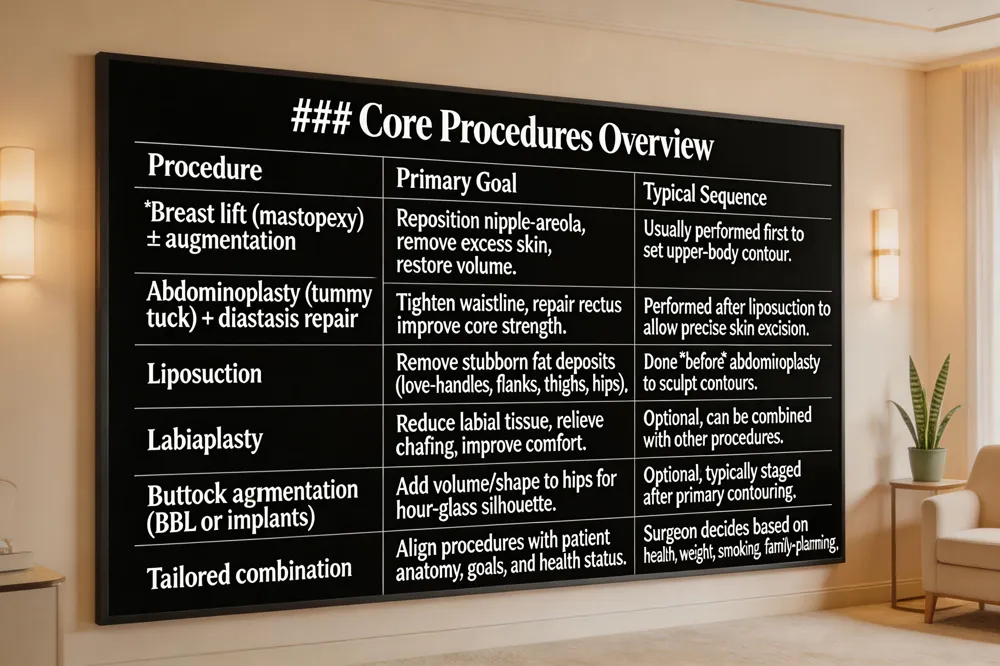 A comprehensive Mommy Makeover is built around a few cornerstone procedures, each selected and sequenced to match a patient’s unique anatomy and aesthetic goals.
Breast lift (mastopexy) and augmentation – Pregnancy and lactation often leave the breasts ptotic and volume‑depleted. A mastopexy repositions the nipple‑areola complex and removes excess skin, while augmentation with silicone or saline implants restores lost fullness, creating a youthful, balanced silhouette.
Abdominoplasty (tummy tuck) and diastasis recti repair – The stretched abdominal wall is addressed via a low‑horizontal bikini‑line incision, excision of redundant skin, and suturing of separated rectus muscles. This not only tightens the waistline but also improves core strength and posture.
Liposuction sequencing and targeted fat removal – Liposuction is typically performed before the tummy tuck to sculpt stubborn deposits in the love‑handles, flanks, thighs, or hips that resist diet and exercise, enhancing overall contouring.
Labiaplasty and optional buttock augmentation – Labial reduction alleviates chafing and restores comfort after childbirth, while a Brazilian butt lift or implants can add volume and shape to the hips, completing the hour‑glass figure.
Tailoring the combination to individual goals – Board‑certified surgeons evaluate health status, smoking cessation, stable weight (within ~25 lb of target), and family‑planning intentions before crafting a personalized operative plan that minimizes downtime and maximizes natural‑looking results.
Recovery Timeline and Practical Tips
Recovery Timeline & Tips
| Phase | Duration | Key Recommendations |
|---|---|---|
| Acute | First 6‑12 hrs | Manage uterine cramping, bleeding, breast engorgement. |
| Subacute | 24 hrs → 2‑6 weeks | Light walking, gentle stretching; avoid heavy lifting (>10‑25 lb). |
| Delayed | 6 weeks → 6 months | Tissue remodeling, core strengthening, gradual return to full activity. |
| Swelling/ bruising | Peaks 10‑14 days | Wear compression garment continuously; apply cold packs 15 min intervals; elevate feet. |
| Toilet sitting after tummy tuck | Ongoing | Use riser, sit slowly, support with handrail, keep slight waist bend, avoid full torso extension. |
| Nutrition | Ongoing | Protein‑rich diet to support tissue repair; stay hydrated. |
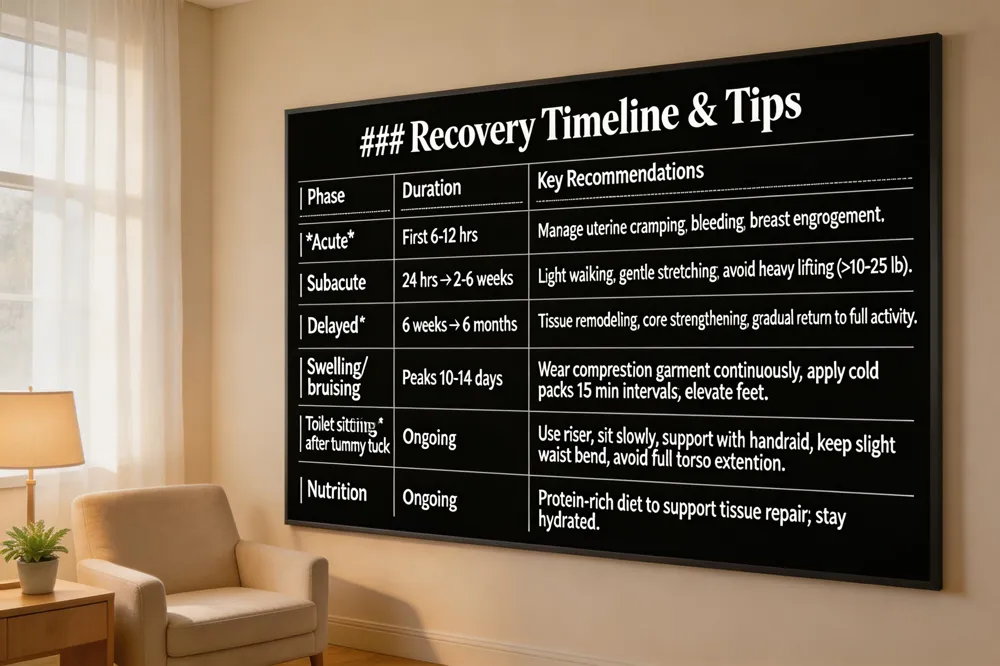 The postpartum period unfolds in three well‑defined phases. The acute phase (first 6‑12 hours) is dominated by uterine cramping, vaginal bleeding and breast engorgement. The subacute phase (24 hours to 2‑6 weeks) brings perineal soreness, lochia, constipation and early incision healing for C‑section or abdominoplasty patients. The delayed phase (6 weeks to 6 months) focuses on tissue remodeling, core strengthening and the gradual return of full activity.
After an abdominoplasty or liposuction, surgeons advise avoiding heavy lifting (>10‑25 lb), vigorous core workouts and prolonged standing for at least 4‑6 weeks. Light walking and gentle stretching are encouraged after the first two weeks to promote circulation without stressing the repaired abdominal wall.
Swelling and bruising peak during the first 10‑14 days. Wear the prescribed compression garment continuously, keep the incision clean and dry, and apply cold packs for 15‑minute intervals. Elevating the feet while seated reduces fluid accumulation, and a balanced protein‑rich diet supports tissue repair.
How to sit on the toilet after a tummy tuck?
- Use a toilet riser or sturdy footstool to raise the seat.
- Sit down slowly, distributing weight evenly.
- Hold a stable surface (grab bar or handrail) for support.
- Keep a slight bend in the waist—avoid fully extending the torso.
- Pause before standing; push up gently with the legs, not the abdomen.
- Keep the incision covered with a breathable dressing or silicone gel sheet as directed by the surgeon.
Cost Overview for NYC Mommy Makeovers
NYC Cost Overview
| Component | Typical Cost (Manhattan) | Notes |
|---|---|---|
| Breast augmentation/lift | $7,000 – $9,000 | Includes implants (silicone or saline) and surgeon fees. |
| Full abdominoplasty | $7,500 – $9,500 | Includes diastasis repair and incision closure. |
| Liposuction | $4,000 – $6,000 | Depends on number of areas treated. |
| Comprehensive Mommy Makeover | $18,000 – $30,000 | Bundled price varies with number of procedures and premium implants. |
| Financing | CareCredit, Cherry Medical, practice‑specific plans | Most insurers consider elective; not covered. |
| Consultation | Usually free or nominal fee | Request itemized quote to align budget expectations. |
 Typical component costs in Manhattan range from $7,000–$9,000 for breast augmentation or lift, $7,500–$9,500 for a full abdominoplasty, and $4,000–$6,000 for liposuction of stubborn fat pockets. When bundled into a comprehensive mommy makeover, the total usually falls between $18,000 and $30,000, depending on the number of procedures and any premium implants.
Financing is widely available through CareCredit, Cherry Medical, and practice‑specific plans, while most insurers consider these surgeries elective and do not cover them. Prospective patients should request a detailed, itemized quote during the initial consultation to align expectations with their budget.
Medical Considerations: Diabetes and Melanoma
Medical Considerations
| Condition | Surgical Approach | Key Points |
|---|---|---|
| Melanoma | Wide local excision with margins based on Breslow thickness; reconstruction (primary closure, graft, flap) as needed. | Collaboration with dermatopathology; aim for clear margins and minimal scarring. |
| Type 2 Diabetes | Proceed if well‑controlled; multidisciplinary plan for glucose monitoring and medication adjustments. | Reduces infection and wound‑healing complications; surgeon ensures safe peri‑operative management. |
| Combined considerations | Ensure both oncologic safety and aesthetic outcome; plastic surgeon trained in both excision and reconstruction. | Allows simultaneous cancer treatment and cosmetic restoration when appropriate. |
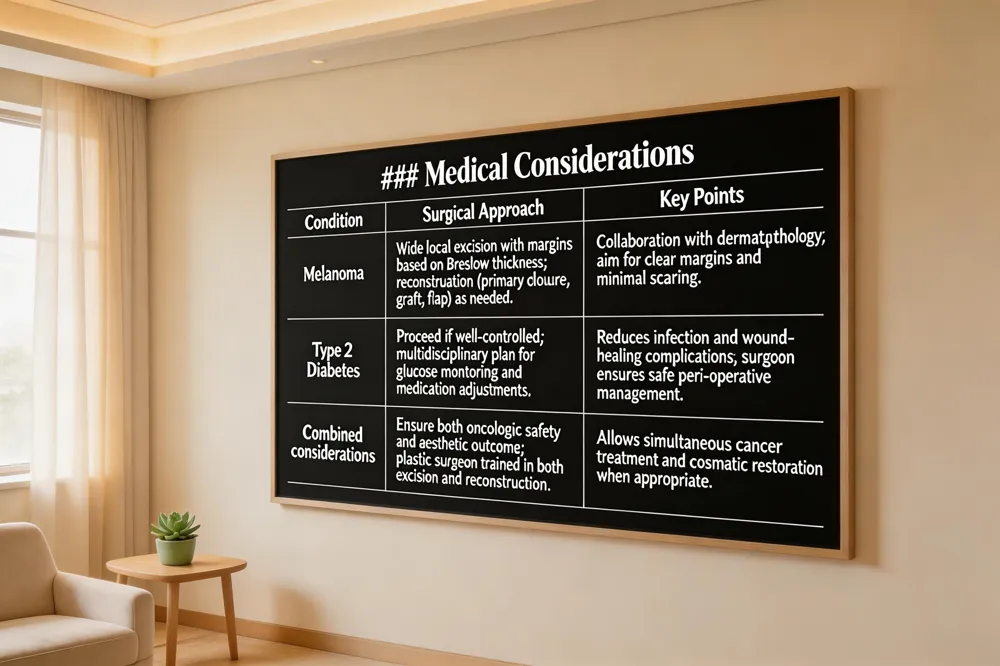 When melanoma is identified, a board‑certified plastic surgeon performs wide local excision with margins dictated by Breslow thickness and collaborates closely with dermatopathology to verify clear borders. Reconstruction—whether primary closure, graft, or flap—is tailored to preserve natural contour and minimize conspicuous scarring, especially in visible zones.
Can type 2 diabetics have plastic surgery? Yes—when diabetes is well‑controlled and a multidisciplinary plan governs glucose monitoring and medication adjustments, surgery can be performed safely, yielding elegant, natural results.
Can a plastic surgeon remove a melanoma? Absolutely. Plastic surgeons are trained in oncologic excision and reconstructive techniques, ensuring both cancer clearance and aesthetically pleasing outcomes.
Choosing the Right Surgeon and Facility
Choosing Surgeon & Facility
| Factor | Importance | Example |
|---|---|---|
| Board certification | Guarantees training, standards, and continuing education. | ABPS‑certified surgeons listed in ASPS directory. |
| Professional affiliations | Access to latest evidence‑based techniques and peer networks. | Membership in ASPS, ASAPS. |
| Facility accreditation | Ensures safety protocols, infection control, and emergency preparedness. | AAAASF‑accredited ambulatory surgery center (e.g., Madison Plastic Surgery). |
| Personalized care model | Tailors operative plan to anatomy, goals, and health status. | VIP concierge consultation, customized operative sequencing. |
| Pre‑operative evaluation | Screens cardiovascular health, smoking status, weight stability. | Comprehensive medical work‑up before surgery. |
| Post‑operative support | Provides compression garments, follow‑up visits, 24‑hour nursing assistance. | Enhances recovery and minimizes complications. |
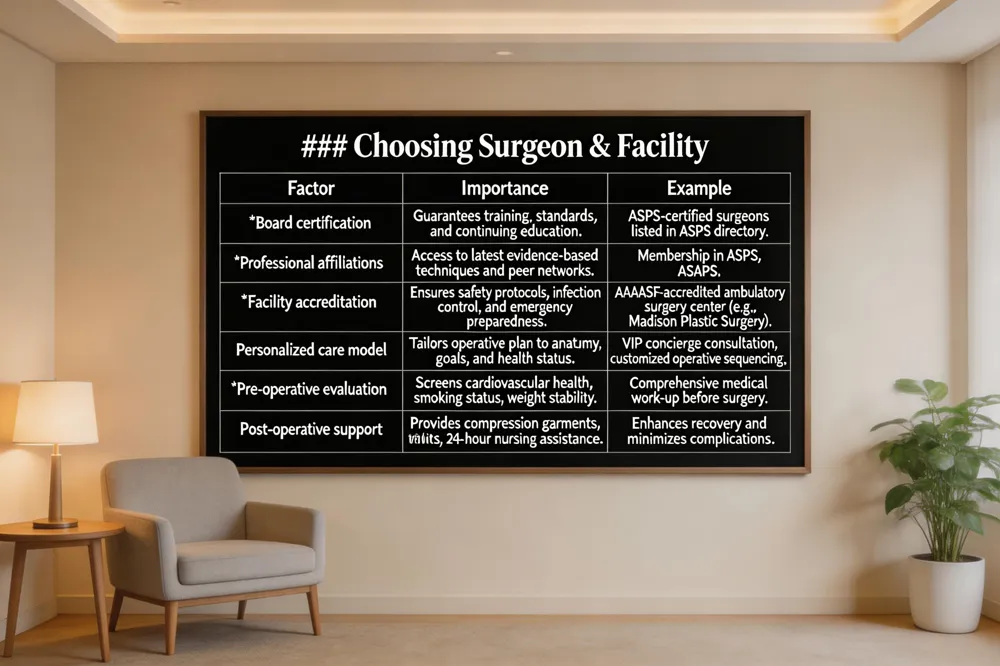 When embarking on a mommy makeover, the surgeon’s board certification and professional affiliations are the foundation of safety and artistry. Board‑certified plastic surgeons—such as those listed in the American Society of Plastic Surgeons (ASPS) directory—have completed rigorous training, passed exhaustive examinations, and maintain continuing‑education standards. In New York, Madison Plastic Surgery exemplifies this excellence; Dr. David Rapaport and his team hold ABPS certification and are active members of ASPS and the American Society for Aesthetic Plastic Surgery, ensuring they are abreast of the latest evidence‑based techniques.
Equally critical is the accreditation of the surgical facility. Madison Plastic Surgery operates in a state‑licensed, AAAASF‑accredited ambulatory surgery center, meeting stringent U.S. patient safety, infection control, and equipment standards. This accreditation, combined with New York State licensing, guarantees a controlled environment for anesthesia monitoring and emergency preparedness.
The boutique, personalized care model distinguishes Madison Plastic Surgery. From a VIP concierge consultation to customized operative plans that may include abdominoplasty, breast lift, liposuction, and labiaplasty, every detail is tailored to the patient’s anatomy and aesthetic goals. Comprehensive pre‑operative evaluations assess cardiovascular health, smoking cessation, and weight stability, while postoperative protocols include compression garments, scheduled follow‑up visits, and 24‑hour nursing support. These safeguards minimize complications—such as infection, bleeding, and a boutique approach that prioritizes safety and individualized outcomes, Madison Plastic Surgery offers the ideal partnership for a successful, luxurious mommy makeover.
Your Path to a Restored Post‑Pregnancy Body
Mommy makeovers restore pre‑baby contours by tightening abdominal muscles, removing excess skin, and rejuvenating the breasts, delivering a firmer waist, lifted breasts, and smoother silhouette. Results are natural‑looking when the surgeon tailors the combination of abdominoplasty, liposuction, breast lift or augmentation, and optional labiaplasty to each patient’s anatomy and goals. Realistic expectations acknowledge a recovery period of several weeks, temporary swelling, and the possibility that future pregnancies may alter outcomes. A personalized consultation with a board‑certified New York surgeon evaluates health, weight stability, and aesthetic desires, allowing a customized plan and clear timeline. To begin, contact the boutique practice to schedule an in‑person visit, discuss financing options such as CareCredit or in‑house plans, and secure a convenient surgery date.