
Does Emsculpt Build Muscle?
Emsculpt is a nonsurgical body-contouring treatment that uses focused electromagnetic energy to trigger strong muscle contractions. Published reports suggest it may increase muscle and reduce some fat in treated areas, but individual results vary and are not guaranteed. It is generally discussed as an option for people seeking added muscle definition, not as a replacement for exercise, weight management, or surgery.
Reported study averages do not predict what any one person will experience. Emsculpt also cannot address every concern that may lead someone to consider body contouring; for example, liposuction is a surgical option used for different goals.
The sections that follow explain how the treatment works, what published reports say, and who might consider it. They also cover what a session may feel like, safety limits, and how long results may last. Allure’s overview of Emsculpt discusses its intended uses and the need to consider treatment alongside an active lifestyle.
How Does Emsculpt Work?
 How Does Liposuction Work?
Liposuction uses a thin tube called a cannula to gently break up and suction out fat from targeted areas. The procedure is performed under anesthesia and can address stubborn fat deposits that do not respond to diet and exercise. Recovery typically involves some swelling and bruising, with most patients returning to normal activities within a week.
During the procedure, the surgeon makes small incisions and inserts the cannula to loosen fat before removing it. According to the American Society of Plastic Surgeons, liposuction is one of the most commonly performed cosmetic surgeries in the United States. The amount of fat removed varies by patient, and results are not guaranteed.
Dr. Robert M. Tornambe, a board-certified plastic surgeon by the American Board of Plastic Surgery who has been practicing in New York City since 1988, performs liposuction using a less-is-more philosophy that prioritizes patient safety and natural appearance. At his Park Avenue practice, he evaluates each patient's anatomy and goals to determine the best approach.
For patients considering body contouring, liposuction offers a surgical option for fat reduction. Dr. Tornambe can discuss how it compares to nonsurgical alternatives during a consultation. Any procedure carries risks, and results depend on individual factors.
[Learn more about liposuction at Madison Plastic Surgery](./liposuction)
What Does the Evidence Show?
 What Does the Evidence Show?
The evidence shows that while non-invasive devices like Emsculpt may offer modest improvements in muscle tone and fat reduction, tummy tuck surgery provides more significant and lasting results for patients with excess skin or separated abdominal muscles. Dr. Robert M. Tornambe, a board-certified plastic surgeon by the American Board of Plastic Surgery who has been practicing in NYC since 1988, recommends a surgical evaluation for patients seeking substantial change.
What do studies say about tummy tuck results?
Peer-reviewed studies and data from the American Society of Plastic Surgeons indicate that tummy tuck surgery consistently removes excess skin and fat and repairs diastasis recti, the separation of the abdominal muscles. The procedure involves a low transverse incision, often placed within the bikini line, and recovery typically takes 2–4 weeks before returning to normal activities. Results are long-lasting with proper diet and exercise.
How does Emsculpt compare?
Emsculpt is a non-invasive device that uses electromagnetic energy to stimulate muscle contractions. Some studies report modest gains in muscle mass and fat reduction, but these results are not comparable to the dramatic changes achieved with surgery. Dr. Tornambe, who completed a breast fellowship with Dr. G. Patrick Maxwell and has been recognized as a New York Magazine Best Doctor, advises patients to consider their goals: if you have loose skin or muscle separation, surgery is likely more effective.
What are the limits of the evidence?
The evidence for Emsculpt comes primarily from company-sponsored studies, which may not be independently verified. In contrast, tummy tuck surgery has decades of peer-reviewed research supporting its efficacy. At Madison Plastic Surgery's AAAASF-accredited in-office operating room on Park Avenue, Dr. Tornambe performs tummy tucks in a private, comfortable setting. Patients from Westchester, Long Island, New Jersey, and Connecticut travel to the practice for this procedure.
Frequently Asked Questions
How long does tummy tuck recovery take?
Most patients return to light activities after two weeks and full activity after six weeks.
Will there be scarring?
Yes, a scar along the bikini line is typical, but it fades over time.
Can I combine tummy tuck with liposuction?
Yes, many patients choose to combine procedures for comprehensive results.
Is tummy tuck right for me?
A consultation with Dr. Tornambe can determine if you are a candidate based on your anatomy and goals.
How long do results last?
Results are long-lasting with stable weight and exercise.
To learn more, book a private consultation at 815 Park Avenue or call (212) 628-7600.
Related procedures: Tummy Tuck, Liposuction, Mommy Makeover.
Which Areas Can It Treat?
Which Areas Can It Treat?
Emsculpt is a non-invasive treatment that uses muscle stimulation to improve muscle tone. At Madison Plastic Surgery, Dr. Robert M. Tornambe, a board-certified plastic surgeon who has practiced in New York City since 1988, can help patients understand how their goals relate to available options. For abdominal concerns, a tummy tuck or liposuction may address excess skin or fat more directly than muscle stimulation. For the buttocks, a Brazilian butt lift uses the patient's own fat to enhance shape and volume. For areas like the arms or thighs, arm lift or liposuction are surgical options that provide more significant changes. Each treatment has different indications, and a consultation at the Park Avenue office can clarify which approach aligns with a patient's anatomy and expectations.
Who Might Consider Emsculpt?
Emsculpt may be worth discussing if you want more definition in a specific muscle group, such as the abdomen or buttocks. It is not a weight-loss treatment, and it should complement, not replace, regular exercise and mindful eating, as Allure’s overview of Emsculpt explains.
The treatment is not suited to everyone, and no particular body type is assured to benefit. A clinician should consider your goals, medical history, and any implanted electronic or metal devices, which may make treatment unsuitable; pregnancy is also a contraindication described in the available guidance.
At Madison Plastic Surgery, Dr. Robert M. Tornambe, a board-certified plastic surgeon who has practiced in New York City since 1988, can help patients compare nonsurgical contouring with surgical options such as liposuction. The right discussion is about the area you want to change, the limits of each option, and whether the expected benefit fits your priorities.
Who may be a candidate for Emsculpt?
Someone seeking targeted muscle definition may ask a qualified clinician whether Emsculpt is appropriate. Suitability depends on individual health factors and goals, and results vary. Dr. Tornambe’s less-is-more approach centers on choosing an option that fits the person, rather than treating a device as a substitute for exercise or a broader weight-management plan.
What Happens During a Session?
Emsculpt is a nonsurgical treatment, and a session is commonly described as taking about 30 minutes. People often describe the sensation as intense rather than like an ordinary workout, though each person’s experience differs.
One firsthand account describes tightening, tingling or zapping, and a strong gripping or pulling feeling as the abdominal muscles contract. That account reflects one person’s experience, not a prediction of how treatment will feel for everyone; the clinician may adjust the intensity to suit a patient’s tolerance. Allure’s overview of Emsculpt also describes a phased abdominal protocol, with stronger contractions followed by slower contractions, but protocols and sensations may vary.
What does an Emsculpt session feel like, and how long does it take?
A session is commonly described as lasting about 30 minutes. Some people report strong tightening, tingling, or pulling sensations. The clinician can adjust intensity, and individual experiences vary.
How many Emsculpt sessions are usually described?
A commonly described abdominal course consists of four sessions spaced a few days apart. This is a reported protocol, not a universal prescription, so a qualified clinician should assess whether it suits your goals and health.
At Madison Plastic Surgery, Dr. Robert M. Tornambe, a board-certified plastic surgeon who has practiced in New York City since 1988, can discuss how nonsurgical body contouring compares with surgical options such as liposuction. Treatment choice depends on your anatomy, goals, and medical history; results vary, and any procedure carries risks.
What Is Recovery Like?
Emsculpt is nonsurgical, so treatment does not involve incisions or the wound care required after surgery. The supplied sources describe no formal downtime, but that does not mean everyone feels the same immediately afterward.
Some people may have temporary muscle soreness, much like the feeling after a strenuous workout. This is a possible response, not a universal one, and your experience can depend on your tolerance and the treatment settings.
A few people may notice a change within a day or two, while more noticeable results may emerge two to four weeks after the final session, according to Allure’s overview of Emsculpt. These are reported timeframes, not a prediction or guarantee; results and timing vary from person to person.
Dr. Robert M. Tornambe, a board-certified plastic surgeon practicing in New York City since 1988, can discuss whether a nonsurgical treatment or a surgical option such as liposuction better fits your goals. At Madison Plastic Surgery on Park Avenue, the conversation includes your anatomy, expectations, and relevant risks.
Is there downtime after Emsculpt, and when might results appear?
The available sources describe no formal downtime, though temporary soreness may occur. Changes may become more noticeable two to four weeks after the last session, but individual experiences vary.
What Are the Risks and Limits?
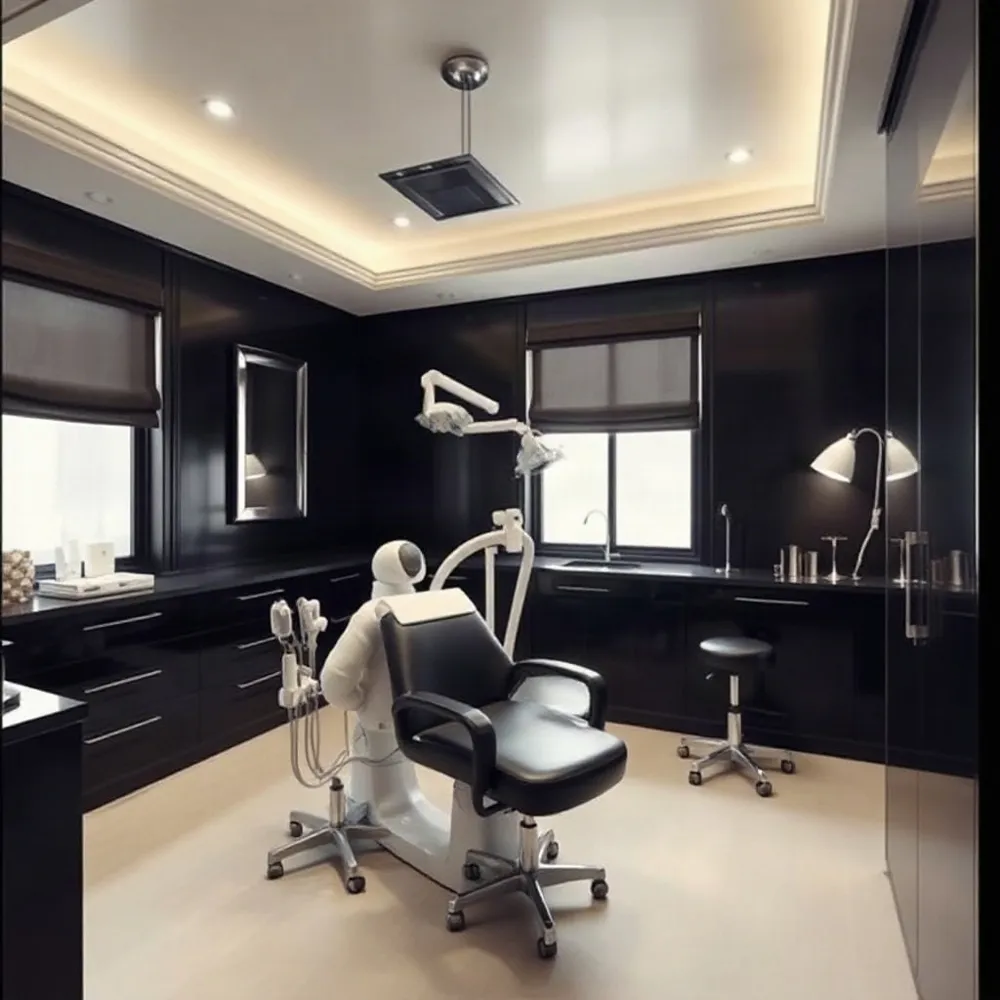 Emsculpt is not appropriate for everyone, and the information available here is not a complete, current safety review. Anyone considering it should have a qualified clinician screen their health history and explain the possible risks; treatment experiences and results vary.
The Allure overview of Emsculpt cautions against treatment during pregnancy and for people with certain implanted metal or electronic devices, including pacemakers. Disclose any implants, devices, pregnancy, and relevant health conditions before treatment so a clinician can assess current safety guidance.
Who should avoid Emsculpt or seek screening first?
People who are pregnant or have certain implanted devices should avoid treatment unless a qualified clinician has reviewed their situation and advised otherwise. Do not rely on a general description of the procedure to determine whether it is safe for you.
Claims that Emsculpt can address diastasis recti, or separation of the abdominal muscles, should be treated cautiously. Abdominal separation needs assessment by an appropriately qualified clinician, and the available source notes that a tummy tuck can correct the condition completely; it does not establish that Emsculpt reliably repairs it.
Dr. Robert M. Tornambe, a board-certified plastic surgeon, offers tummy tuck surgery at Madison Plastic Surgery, but the procedure is distinct from Emsculpt and requires its own consultation. A tummy tuck involves surgery, and its risks and expected results depend on the individual. Dr. Tornambe discusses the available options at the practice on Park Avenue, and patients can also read about limitations of noninvasive body sculpting.
How Long Do Results Last?
Emsculpt results are not established as permanent, and the information available here does not support a guaranteed duration. One commercial provider advises that muscle gains may fade without continued activity, but that is provider guidance, not independent proof of how long an individual’s results will last.
The treatment is described as a complement to an active lifestyle, not a replacement for regular exercise or mindful eating, in Allure’s overview of Emsculpt. Continuing strength training and healthy habits may support muscle tone, but they cannot guarantee that treatment effects will remain unchanged.
Provider sources give different suggestions for follow-up treatments, so there is no universal maintenance schedule to apply to everyone. Dr. Robert M. Tornambe can help patients consider realistic expectations and whether a nonsurgical treatment or a surgical option better fits their goals. For comparison, our discussion of body sculpting with cryolipolysis also notes that treatment outcomes should not be assumed to last indefinitely.
Are Emsculpt results permanent?
The available information does not establish that results are permanent. Ask a qualified clinician what changes may be realistic for you, how ongoing activity could affect them, and whether any follow-up treatment is appropriate.
Questions to Ask Before Deciding
Emsculpt is described as a possible addition to an active lifestyle, not a replacement for exercise. It is intended for localized muscle stimulation and body contouring, rather than general weight loss. At Madison Plastic Surgery, Dr. Robert M. Tornambe, a board-certified plastic surgeon practicing in New York City since 1988, can discuss surgical options such as tummy tuck when abdominal concerns call for a surgical evaluation.
Can Emsculpt replace exercise?
No. The Allure overview of Emsculpt presents it as a complement to regular exercise and mindful eating, not a substitute for either.
Is Emsculpt a weight-loss treatment?
No. The information available describes localized muscle stimulation and body contouring, not treatment for general weight loss. It should not be viewed as a replacement for broader medical or lifestyle approaches to weight management.
Can Emsculpt replace a tummy tuck for diastasis recti?
The supplied information does not establish that Emsculpt completely repairs diastasis recti, the separation of abdominal muscles. The Allure article reports that tummy tuck surgery can correct this condition completely, but the right approach depends on an individual assessment. Dr. Tornambe can evaluate abdominal muscle separation and explain whether surgery is appropriate; outcomes and risks vary.
How much does Emsculpt cost at Madison Plastic Surgery?
Madison Plastic Surgery does not list Emsculpt among its offered procedures, so no Madison price is available. For surgery, cost depends on factors such as the surgeon, anesthesia, facility, and whether procedures are combined; exact pricing is provided at consultation.
For patients considering a tummy tuck or another surgical option, Dr. Tornambe discusses the procedure, expected recovery, risks, and costs during a private consultation. Madison Plastic Surgery performs surgery in its AAAASF-accredited in-office operating room on Park Avenue. To discuss whether surgery fits your needs, book a private consultation at 815 Park Avenue or call (212) 628-7600.
A Measured View of Emsculpt
Emsculpt may stimulate targeted muscle, and published reports describe changes in muscle and fat. Those findings do not predict an individual result, and the available evidence should be considered with care. Treatment does not replace regular exercise or address every concern about body shape.
Safety screening matters, as do realistic expectations and a discussion of alternatives. Dr. Robert M. Tornambe is certified by the American Board of Plastic Surgery and has practiced in New York City since 1988. Madison Plastic Surgery does not offer Emsculpt; for a procedure the practice does provide, a consultation can help clarify suitable options, their risks and likely recovery.
Results and risks depend on the individual and should be discussed directly with a qualified clinician. To arrange a private consultation at 815 Park Avenue, call (212) 628-7600.