Why Accreditation Matters
Accreditation is the cornerstone of patient safety in aesthetic surgery. Facilities that meet the rigorous standards of bodies such as The Joint Commission, AAAHC, AAAASF, SRC and ACHC must maintain spotless sanitation, fully qualified anesthesia teams, and emergency protocols—reducing infection and complication rates. Equally vital are the credentials of the surgeon; board‑certified plastic surgeons (ABPS) or cosmetic surgeons (ABCS) have completed accredited residencies, fellowships, and continuous education, translating into higher technical mastery and lower adverse‑event incidence. When a surgeon operates within an accredited center, the synergy of vetted staff, state‑of‑the‑art equipment, and strict oversight ensures natural‑looking results, patient confidence, and the elevated, boutique experience expected by discerning clientele.
Understanding Surgeon Accreditation and Certification
 When selecting a cosmetic surgeon, the gold‑standard credential is certification by the American Board of Plastic Surgery (ABPS), an ABMS member board. ABPS certification confirms that the surgeon completed an accredited plastic‑and‑reconstructive‑surgery residency, passed rigorous written and oral examinations, and maintains an unrestricted state medical license. While the American Board of Cosmetic Surgery (ABCS) and the American Board of Surgery (ABS) also award board status, ABCS focuses exclusively on aesthetic procedures and requires a dedicated cosmetic‑surgery fellowship, whereas ABS validates general surgical competence. All three boards demand continuous certification—ongoing CME, practice‑improvement activities, and adherence to strict ethical codes—to ensure surgeons remain current with evolving techniques and patient‑safety standards.
What accreditation should a plastic surgeon have? The surgeon should hold ABPS certification and a valid, unrestricted medical license, both verifiable through the Federation of State Medical Boards.
What does it mean for a surgeon to be ABPS certified? It signifies completion of an accredited residency, successful passage of comprehensive exams, and commitment to lifelong learning and ethical practice.
How do I check if a doctor is board certified? Use the ABPS “Verify a Surgeon” tool, cross‑check on the ABMS Certification Matters site, and confirm licensure via the state medical board.
How to verify American Board of Plastic Surgery certification? Visit the ABPS website, enter the surgeon’s name or NPI, and review active certification dates and any disciplinary notes.
What is the American Board of Cosmetic Surgery? ABCS is an independent certifying body that validates exclusive expertise in cosmetic surgery through fellowship training, rigorous exams, and ongoing safety education, with verification available via its online directory.
Choosing the Right Facility and Hospital
 Selecting an accredited surgical center is the cornerstone of a safe, luxury aesthetic experience. Facilities that hold Joint Commission, AAAHC, AAAASF, or ACHC accreditation must meet rigorous standards for sanitation, equipment, emergency preparedness, and staffed with a qualified anesthesiologist or certified registered nurse anesthetist. These verifications guarantee a clean, fully equipped operating room and a team trained to handle complications, providing peace of mind for discerning patients.
Which hospitals in NYC are recognized for top‑tier plastic surgery?
The Department of Plastic Surgery at Lenox Hill Hospital, together with Manhattan Eye, Ear & Throat Hospital (MEETH), is widely regarded as a premier center for cosmetic and reconstructive procedures. North Shore University Hospital and its affiliated Long Island Jewish Medical Center offer a full spectrum of aesthetic, craniofacial, and microsurgical services staffed by internationally renowned surgeons. Jacobi Medical Center also ranks among the city’s top institutions, providing extensive hand‑trauma and facial reconstruction expertise. These hospitals are distinguished by cutting‑edge research, multidisciplinary teams, and a track record of natural, elegant results.
How to confirm a surgeon’s hospital privileges?
Contact the hospital’s medical‑staff office or visit its website for a searchable list of physicians with active privileges. Request the surgeon’s credentialing packet, which includes the most recent privilege letters and board certifications. In New York, the Department of Health requires coordinated credentialing, so you may also request written verification from the hospital’s credentialing department citing Public Health Law §§ 2805‑j/k and cross‑check the surgeon’s license on the New York State Education Department portal.
Are there board‑certified plastic surgeons in Staten Island?
Yes. Staten Island residents have access to ABPS‑certified plastic surgeons throughout the greater New York area. The New York Regional Society of Plastic Surgeons lists numerous board‑certified physicians who accept patients from all boroughs, including Staten Island. For example, Dr. Hein of Madison Plastic Surgery regularly treats Staten Island patients, and other surgeons such as Dr. David L. Abramson (NJ) and Dr. Tommaso Addona (Garden City) also welcome referrals.
Verifying Credentials and Ensuring Safety
 Prospective patients can confirm a surgeon’s qualifications with a few reliable online tools. Begin at the American Board of Plastic Surgery (ABPS) “Verify a Surgeon” portal to ensure active board certification, then cross‑check the practitioner’s medical license on the New York State Department of Health physician‑licensure database for any disciplinary actions. Hospital privileges are often listed on the surgical center’s website, and the American Society of Plastic Surgeons (ASPS) member directory provides another layer of verification. Finally, a quick search of the state health department’s malpractice database completes the due‑diligence process.
Madison Plastic Surgery exemplifies a safety‑first culture. The practice operates in a New York‑state‑licensed, Joint Commission‑accredited ambulatory surgery suite that meets American Society of Plastic Surgeons (ASPS)‑mandated infection‑control standards. Every patient receives a thorough pre‑operative medical evaluation, FDA‑approved implants, and a board‑certified anesthesiologist. The operating room follows the WHO Surgical Safety Checklist, features real‑time vital‑sign monitoring, and maintains a fully stocked crash cart for emergencies. Post‑procedure care includes 24‑hour nurse access and structured follow‑up, both in‑person and virtual, ensuring a seamless recovery.
Core safety measures—board‑certified surgeons, accredited facilities, strict sterile technique, and dedicated anesthesia professionals—work together to minimize complications. Madison Plastic Surgery also adheres to CDC infection‑control practices and continuously reviews outcomes, reinforcing its reputation for natural, elegant results in a luxurious, confidence‑building environment.
Specialized Expertise and Procedure Options
 Madison Plastic Surgery brings together a cadre of board‑certified surgeons who set the benchmark for aesthetic mastery in New York City.
Facial aesthetics leaders – Dr. Hein, a distinguished ABPS‑certified surgeon and Fellow of the American Academy of Facial Plastic and Reconstructive Surgery, is celebrated for deep‑plane facelifts, rhinoplasty, and nuanced facial rejuvenation. He joins the ranks of Dr. Andrew Jacono, Dr. Sherrell Aston, and Dr. Daniel C. Baker—each recognized by New York Magazine and elite peer‑reviewed lists for their meticulous facial work.
Breast augmentation expertise – Under the guidance of Dr. Robert Tornambe, Madison’s breast program blends fellowship training in cosmetic and reconstructive breast surgery with a "less‑is‑more" philosophy, offering silicone, saline, and cohesive‑gel implants in a boutique, safety‑first environment.
Facelift innovation – Dr. Hein’s modern, minimally invasive facelift techniques emphasize natural harmony, minimal scarring, and swift recovery, positioning him among the city’s top facelift surgeons.
Diabetes considerations – Type 2 diabetes is not a barrier when glucose is well‑controlled (A1C within surgeon‑approved range), peri‑operative monitoring is instituted, and cardiovascular health is cleared.
Melanoma removal collaboration – Plastic surgeons at Madison work alongside dermatologists and oncologic surgeons to achieve clear margins and aesthetic closure, employing grafts, flaps, or microsurgical reconstruction for facial, cervical, or hand lesions.
Credentials of Madison’s surgeons – Dr. Hein exemplifies the practice’s standards: ABPS certification, fellowship training, extensive aesthetic experience, and continuous education, ensuring patients receive personalized, natural‑looking results in an accredited, state‑of‑the‑art facility.
Outcome Transparency and Patient Resources
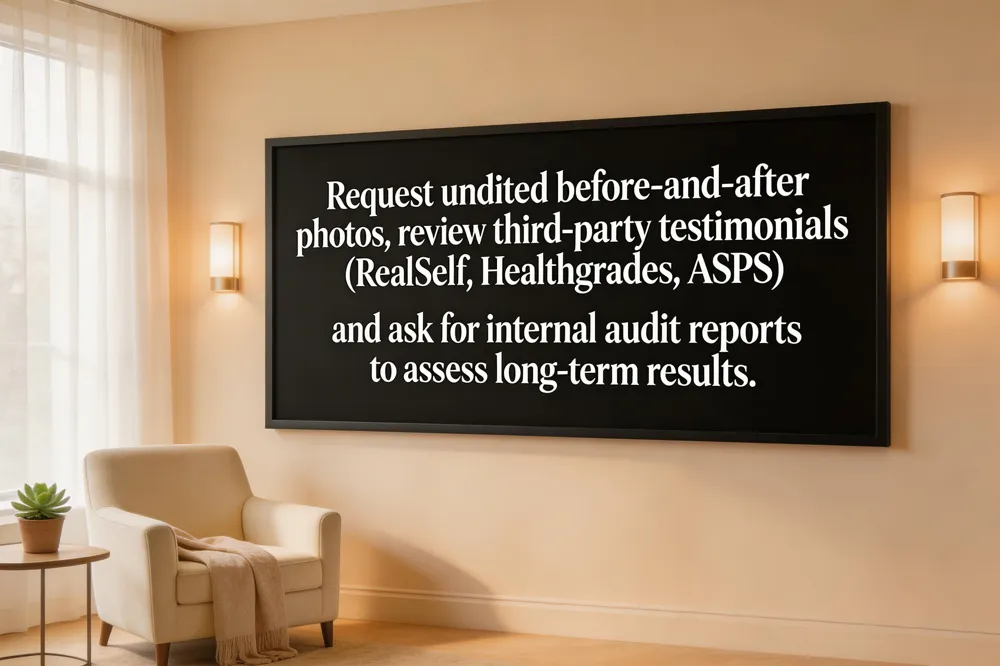 When evaluating a cosmetic surgeon, request a detailed outcome history during the initial consultation. Ask for verified, unedited before‑and‑after photographs of patients who have undergone the exact procedure you are considering, and compare them with the surgeon’s gallery on the practice website. Supplement this visual review with patient testimonials on reputable third‑party platforms such as RealSelf, Healthgrades, and the American Society of Plastic Surgeons (ASPS) outcome database. Confirm the surgeon’s board certification, hospital privileges, and any published complication rates. Many boutique practices, including Madison Plastic Surgery, also provide internal audit reports or peer‑reviewed studies that document long‑term results and safety metrics, offering an additional layer of confidence before you commit.
Your Path to Safe, Elegant Aesthetic Care
Choosing an accredited surgical facility is the cornerstone of safe cosmetic care. Accreditation—whether by the Joint Commission, AAAHC, AAAASF, or ACHC—guarantees strict standards for sanitation, qualified anesthesia staff, emergency equipment, and ongoing unannounced inspections. To verify a surgeon, patients should confirm board certification through the ABPS or ABCS directories, check active state medical licensure, and review membership in societies such as ASPS or The Aesthetic Society. Facility verification involves confirming the center’s accreditation badge, asking for copy of the most recent survey, and ensuring the presence of a board‑certified anesthesiologist. Madison Plastic Surgery exemplifies these principles: all physicians are ABPS‑certified, the New York suite holds Joint Commission accreditation, and the practice follows CDC infection‑control protocols, safety audits, and patient‑education standards.