Understanding Facial Fat Transfer
Facial fat grafting, also called autologous fat transfer, is a surgical technique that harvests the patient’s own adipose tissue and re‑injects it into areas of volume loss such as cheeks, temples, under‑eye hollows, nasolabial folds and jawline. Because the graft is autologous, there is essentially no risk of allergic reaction or foreign‑body rejection; the cells integrate seamlessly with native fat and, through neovascularization, become a permanent, living filler. The procedure begins with gentle liposuction of donor sites—commonly abdomen, thighs or flanks—followed by low‑speed centrifugation or sedimentation to isolate viable adipocytes. Using micro‑cannulas, the surgeon places the purified fat in tiny 0.1‑mL parcels across multiple tissue planes, often over‑injecting by 15‑20 % to compensate for inevitable early resorption. The result is a natural, long‑lasting contour that ages with the patient.
The Science Behind Natural Volume Restoration
 Autologous facial fat grafting leverages the patient’s own adipose tissue, eliminating any risk of allergic reaction or foreign‑body rejection while delivering a 100% biocompatible filler that blends seamlessly with native structures. Harvested fat is gently processed—often by low‑speed centrifugation or sedimentation—to isolate viable adipocytes and a rich population of adipose‑derived stem cells (ADSCs). These stem cells and their associated growth factors (VEGF, TGF‑β, PDGF, among others) stimulate collagen remodeling, angiogenesis, and elastin production, which collectively improve dermal thickness, texture, and overall skin quality beyond mere volume replacement. Once injected in micro‑droplet parcels across multiple tissue planes, a portion of the graft establishes a new vascular network; the surviving cells become permanent components of the facial tissue, aging naturally with the patient. Because a predictable percentage of fat is reabsorbed during the first three to six months, surgeons typically over‑fill by 20‑30 % to achieve the desired final contour. The result is a durable, natural‑looking rejuvenation that can persist for years, especially when patients maintain stable weight and follow post‑operative care protocols.
Step‑by‑Step: What Happens During Facial Fat Grafting
 Facial fat grafting facial fat grafting at Madison Plastic Surgery is a meticulously choreographed process that blends artistry with surgical precision. 1) Consultation and analysis – Your journey begins with an in‑depth facial assessment, where high‑resolution imaging and a personalized analysis of volume loss, skin quality, and aesthetic goals shape a bespoke treatment plan. 2) Anesthesia – Comfort is paramount; most patients receive local anesthesia with mild sedation, while larger volume augmentations may be performed under general anesthesia in an accredited outpatient suite. 3) Fat harvesting – Using a micro‑cannula and low‑negative‑pressure liposuction, we gently extract adipose tissue from donor sites such as the abdomen, flanks, or thighs, preserving cellular integrity and stem‑cell viability. 4) Purification – The harvested fat undergoes careful processing—centrifugation at 3,000 rpm or gentle filtration—to eliminate blood, oil, and tumescent fluid, yielding a concentrate of viable adipocytes and regenerative growth factors. 5) Injection technique – Finally, the purified fat is micro‑injected in 0.1 mL parcels through fine‑gauge cannulas, layered across deep and superficial facial compartments to ensure optimal revascularization and smooth, natural contour. Post‑procedure, patients receive detailed after‑care instructions, including compression garments, activity modifications, and follow‑up visits to monitor healing and graft integration.
Recovery Timeline and Post‑Op Care
 Immediately after facial fat transfer patients notice mild swelling and bruising at both donor and facial sites; these effects typically peak within the first 48‑72 hours and then taper off. Most patients can resume light, non‑strenuous activities—such as walking, office work, and light household chores—within 3‑5 days, while more demanding exercise is deferred for 2‑3 weeks to protect the fat grafts. The contour begins to settle by 6‑8 weeks, and the grafted fat continues to integrate, with final volume stabilization usually evident at 3‑4 months; complete tissue maturation may extend to 6 months or longer. Post‑operative instructions include keeping the head elevated, applying cold compresses, wearing a compression garment on the donor site for 2‑3 days, avoiding smoking, maintaining stable weight, and following all prescribed medication regimens. Adherence to these guidelines maximizes graft survival and delivers the natural, long‑lasting results that discerning patients expect.
Safety, Risks, and Disadvantages
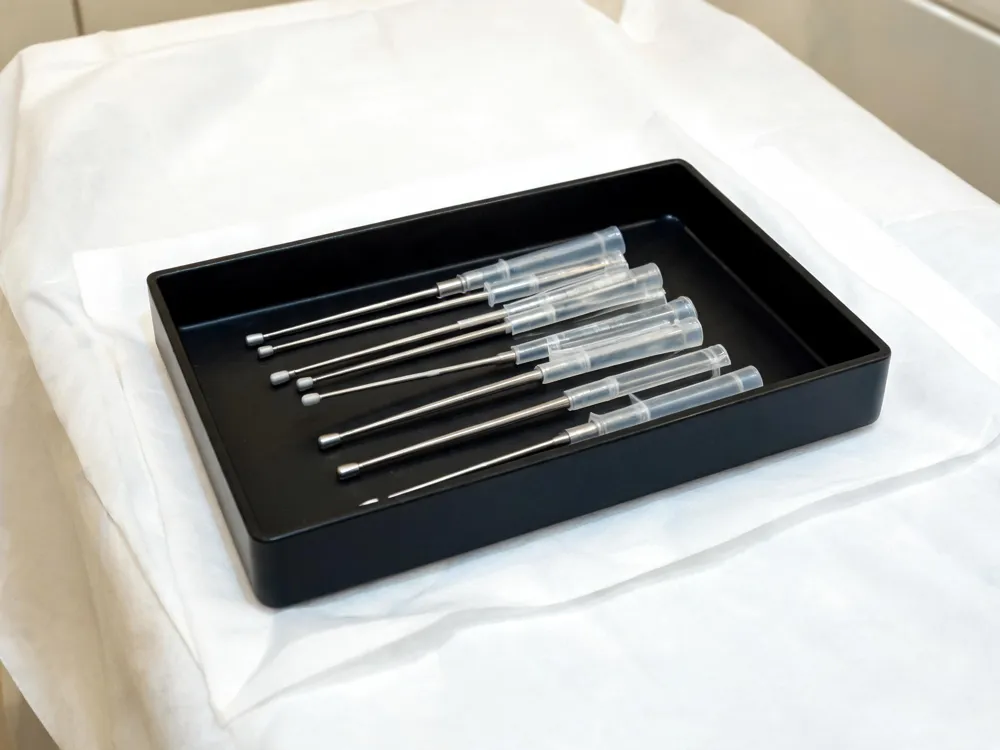 Facial fat grafting is regarded as safe when performed by an experienced, board‑certified surgeon; the autologous tissue eliminates allergic or foreign‑body reactions and most patients experience only temporary swelling, bruising, and mild discomfort that resolve within weeks. Serious complications—such as infection, fat embolism, vascular injury, or significant fat necrosis—are rare and mitigated by blunt‑tip cannulas, low‑pressure harvest, and meticulous micro‑droplet placement. The principal disadvantage is unpredictable fat resorption, with 30‑70 % of grafted cells typically retained and the remainder reabsorbed, often requiring modest over‑fill or a secondary touch‑up. Irregularities like lumpiness, contour dimpling, or oil cysts can arise if grafts are placed too superficially or unevenly, and donor‑site scarring, though minimal, is possible. Finally, significant post‑procedure weight loss or gain can diminish or amplify the restored volume, making long‑term stability dependent on weight stability.
Cost Considerations in New York City
 Facial fat transfer in New York City reflects the city’s premium aesthetic market and the expertise of board‑certified surgeons. At Madison Plastic Surgery the procedure typically ranges from $7,500 to $12,000, with a baseline starting at $4,500 depending on volume and treated zones. Under‑eye fat grafting, a delicate micro‑fat technique, generally costs $5,500–$8,500, encompassing harvesting, processing, and precise micro‑injection. Nationally, the average fee for a facial fat‑grafting session is $2,500–$5,000, while the broader fat‑transfer average across all indications sits around $2,085. Factors influencing price include surgeon reputation, facility accreditation, the number of facial compartments addressed, adjunctive technologies such as PRP, and whether anesthesia is local or general. Compared with synthetic dermal fillers—priced $6–$12 per syringe and requiring repeat treatments every 6–18 months—fat grafting offers a semi‑permanent, natural solution, often delivering superior long‑term value for discerning clients.
Choosing Fat Grafting: Is It Right for You?
 Facial fat grafting is ideal for patients in their 30s‑50s who show early‑to‑moderate volume loss in cheeks, temples, under‑eye hollows or nasolabial folds and have stable weight, good skin elasticity, and realistic expectations. Ideal candidates are nonsmokers with sufficient donor‑site fat and a desire for a permanent, natural‑looking solution; those seeking temporary results or deep skin tightening may be better served by hyaluronic‑acid fillers, laser resurfacing, or a surgical lift. Long‑term durability is impressive—studies show 30-70% graft survival, with many patients retaining meaningful volume at five years, though subtle settling occurs with aging. Outcomes are evident after six months as the graft vascularizes; patients should anticipate a brief downtime of swelling and bruising and understand that the results are permanent and not reversible. Our website features an extensive before‑and‑after gallery illustrating natural, elegant outcomes across multiple facial zones. If you wonder whether your own body can restore volume without surgery, lifestyle measures may improve skin texture but cannot replace lost fat pads; autologous transfer remains the most effective method for true volume restoration.
Elegant, Natural Results at Madison Plastic Surgery
At Madison Plastic Surgery, every facial fat grafting journey is tailored to the individual’s anatomy and aesthetic goals, reflecting a true boutique experience. Our board‑certified surgeon, Dr. Carmen Kavali, brings decades of refined technique and a meticulous, micro‑droplet injection method that maximizes graft survival while preserving natural contours. Prior to the procedure, a comprehensive consultation and three‑D imaging ensure precise planning, and the surgery is performed in an AAAASF‑accredited facility with rigorous sterile protocols, local and anesthesia options, and vigilant intra‑operative monitoring. By over‑filling modestly to accommodate inevitable reabsorption, we achieve semi‑permanent volume that integrates seamlessly with native tissue, delivering elegant, lasting results that age gracefully with the patient and renewed confidence for life today.