Why Body Type Matters in Natural Aesthetic Enhancement
Ectomorph, mesomorph, and endomorph somatotypes each present unique physiological traits that shape aesthetic objectives. Ectomorphs possess a lean, narrow frame, thin skin, and a fast basal metabolic rate; they typically seek volume‑adding procedures such as hyaluronic‑acid fillers or autologous fat grafting to create soft‑tissue fullness without excess weight gain. Mesomorphs exhibit a muscular build, moderate skin elasticity, and efficient metabolism, making them ideal candidates for subtle contouring—autologous fat transfer or low‑dose neuromodulators that preserve their naturally balanced proportions. Endomorphs carry higher body‑fat percentages, slower metabolism, and robust subcutaneous fat stores, often benefiting from fat‑reduction technologies (cryolipolysis, RF tightening) combined with low‑dose botulinum toxin to avoid over‑projection. Because these anatomical differences dictate tissue response, safety, and longevity, a personalized treatment plan—rooted in comprehensive skin analysis, metabolic assessment, and lifestyle counseling—is essential to achieve natural‑looking, long‑lasting results that enhance confidence while respecting each patient’s unique silhouette.
Somatotypes: Foundations for a Tailored Enhancement Strategy
Somatotype Overview
| Somatotype | Key Physical Traits | Ideal Non‑Surgical Enhancements | Nutrition Focus | Exercise Recommendation |
|---|---|---|---|---|
| Ectomorph | Lean frame, narrow shoulders, fast BMR, thin subcutaneous fat | Autologous fat grafts, hyaluronic acid fillers | Calorie‑dense, protein‑rich meals; longer rest intervals | Hypertrophy‑focused resistance training with longer rest periods; calorie surplus |
| Mesomorph | Muscular athletic build, moderate bone density, balanced fat distribution | Modest autologous fat transfer, RF‑based skin tightening | Balanced macronutrients (0.8‑2.2 g/kg protein) | Mixed strength‑and‑cardio program preserving muscle while allowing modest calorie adjustments |
| Endomorph | Broader bone structure, higher body‑fat %, slower metabolism | Low‑dose botulinum toxin, targeted cryolipolysis, metabolic conditioning | High‑protein, lower‑carbohydrate diet | High‑intensity interval training (HIIT) & metabolic conditioning to boost basal calorie burn |
 Ectomorphs present a lean frame, narrow shoulders, fast basal metabolic rate and limited subcutaneous fat; mesomorphs exhibit a muscular, athletic build with moderate bone density, efficient metabolism and balanced fat distribution; endomorphs display a broader bone structure, higher body‑fat percentage and slower metabolic turnover. These physiological differences dictate optimal aesthetic pathways: ectomorphs benefit from volume‑adding autologous fat grafts or hyaluronic acid fillers to counter thin tissue, mesomorphs respond well to modest autologous fat transfer and RF‑based skin tightening that preserves their natural contour, while endomorphs achieve the best silhouette enhancement through low‑dose botulinum toxin, targeted cryolipolysis, and diligent metabolic conditioning. Evidence‑based nutrition aligns with each somatotype—ectomorphs require calorie‑dense, protein‑rich meals with longer rest intervals; mesomorphs thrive on balanced macronutrients (0.8‑2.2 g/kg protein) and mixed training; endomorphs benefit from high‑protein, lower‑carbohydrate diets and high‑intensity interval conditioning to boost metabolic efficiency. Integrated, personalized plans that combine these dietary and exercise principles with FDA‑cleared, minimally invasive technologies deliver natural, lasting results while prioritizing safety and patient confidence.
Natural, Non‑Surgical Enhancements Aligned with Body Type
Non‑Surgical Enhancements by Somatotype
| Somatotype | Preferred Fillers/Procedures | Rationale |
|---|---|---|
| Ectomorph | Hyaluronic‑acid facial fillers | Adds volume without over‑projection; preserves light, airy frame |
| Mesomorph | Autologous fat grafting | Leverages stable moderate fat reserves for biologically compatible volume enhancement |
| Endomorph | Low‑dose botulinum toxin + carefully placed filler | Relaxes over‑active muscles; avoids excessive projection while respecting fuller silhouette |
| All Types | PRP, RF/Ultrasound/Laser tightening | Stimulates collagen remodeling, improves texture, supports durability of volume procedures |
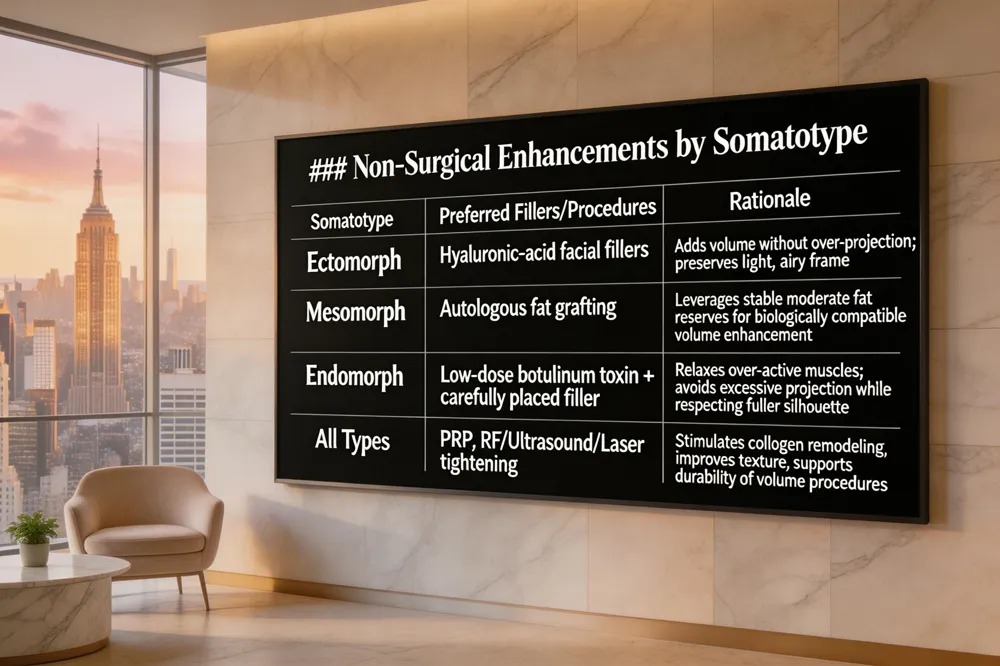 Tailoring non‑invasive aesthetics to somatotype maximizes natural‑looking results. For ectomorphs, whose thin skin and high basal metabolism limit subcutaneous fat, hyaluronic‑acid facial fillers add volume without over‑projection, restoring youthful contours while preserving the light, airy facial frame. Mesomorph patients benefit from autologous fat grafting; their stable, moderate fat reserves provide a biologically compatible filler that enhances facial or body volume and integrates seamlessly with existing tissue. Endomorphs, often carrying higher body‑fat percentages and slower metabolism, achieve balanced refinement with low‑dose botulinum toxin to relax over‑active muscles, paired with carefully placed filler that avoids excessive projection and respects their fuller silhouette. Across all body types, Platelet‑rich plasma (PRP) and energy‑based tightening (radiofrequency, ultrasound, laser) stimulate collagen remodeling, improve skin texture, and support the durability of volume‑enhancing procedures, delivering a cohesive, elegant outcome that aligns with each patient’s unique anatomy and confidence goals.
Lifestyle Factors That Prolong Enhancement Results
Lifestyle Pillars for Longevity
| Factor | Recommendation | Benefit |
|---|---|---|
| Nutrition | 1.2‑2.2 g/kg high‑quality protein + antioxidant‑dense foods (berries, leafy greens, nuts) | Supplies amino acids for collagen synthesis; neutralizes free radicals that degrade fillers & PRP |
| Hydration | 2‑3 L water daily | Maintains dermal turgor and supports metabolic waste removal |
| Sleep | 7‑9 hours quality sleep | Enhances nightly collagen turnover and tissue repair |
| Stress Management | Mindfulness, yoga, meditation | Reduces cortisol‑induced collagen breakdown |
| Exercise | Tailored to somatotype (HIIT for endomorphs, balanced strength‑cardio for mesomorphs, hypertrophy resistance for ectomorphs) | Boosts metabolic efficiency, preserves muscle mass, improves skin firmness |
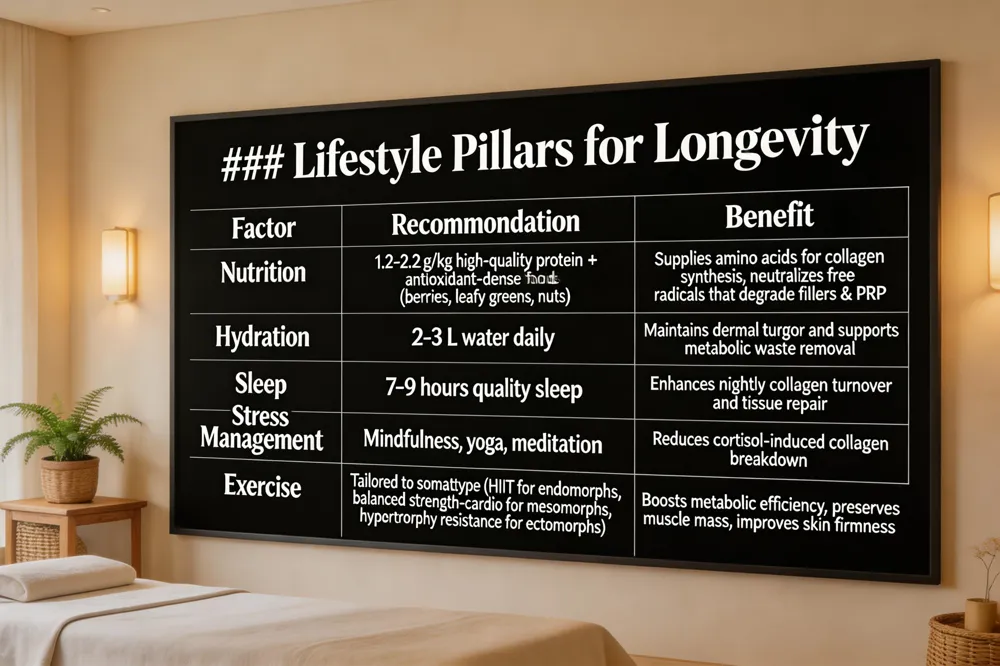 A protein‑rich, antioxidant‑dense diet is the cornerstone of lasting fillers and skin‑tightening outcomes. High‑quality protein (1.2–2.2 g/kg body weight) supplies the amino acids needed for collagen synthesis, while antioxidants from berries, leafy greens, and nuts neutralize free radicals that degrade hyaluronic‑based fillers and PRP‑induced collagen.
Exercise regimens should be matched to somatotype. Endomorphs benefit from high‑intensity interval training and metabolic conditioning to boost basal calorie burn; mesomorphs thrive on balanced strength‑and‑cardio programs that preserve muscle while supporting modest calorie adjustments; ectomorphs need hypertrophy‑focused resistance work with longer rest periods and a calorie‑surplus diet to maintain muscle mass and improve skin firmness.
Adequate hydration, 7–9 hours of quality sleep, and stress‑reduction practices (mindfulness, yoga) further sustain collagen turnover and minimize cortisol‑induced breakdown, ensuring that natural enhancements such as fillers, RF tightening, and autologous fat grafts remain supple and durable over time.
Safety Protocols and Personalized Planning at Madison Plastic Surgery
Madison Plastic Surgery Safety Framework
| Step | Description | Safety Measure |
|---|---|---|
| 1️⃣ Medical History & Skin Analysis | Comprehensive review of health, skin thickness, fat distribution, metabolic rate, implants | Identifies contraindications early |
| 2️⃣ Somatotype‑Specific Assessment | Determines ectomorph/mesomorph/endomorph classification | Tailors treatment plan to anatomy |
| 3️⃣ Board‑Certified Surgeon & AAAASF‑Accredited Facility | Experienced surgeons, sterile environment, continuous monitoring | Minimizes procedural risk |
| 4️⃣ Precise Dosing of Injectables | Controlled amounts of HA fillers, low‑dose botulinum toxin | Reduces over‑correction & adverse reactions |
| 5️⃣ FDA‑Cleared Energy Devices (RF, Ultrasound, Cryolipolysis) | Targeted tissue remodeling sparing surrounding structures | Ensures device safety and efficacy |
| 6️⃣ Post‑Procedure Protocol | Hydration, protein‑rich nutrition, gradual activity resumption | Supports healing and longevity of results |
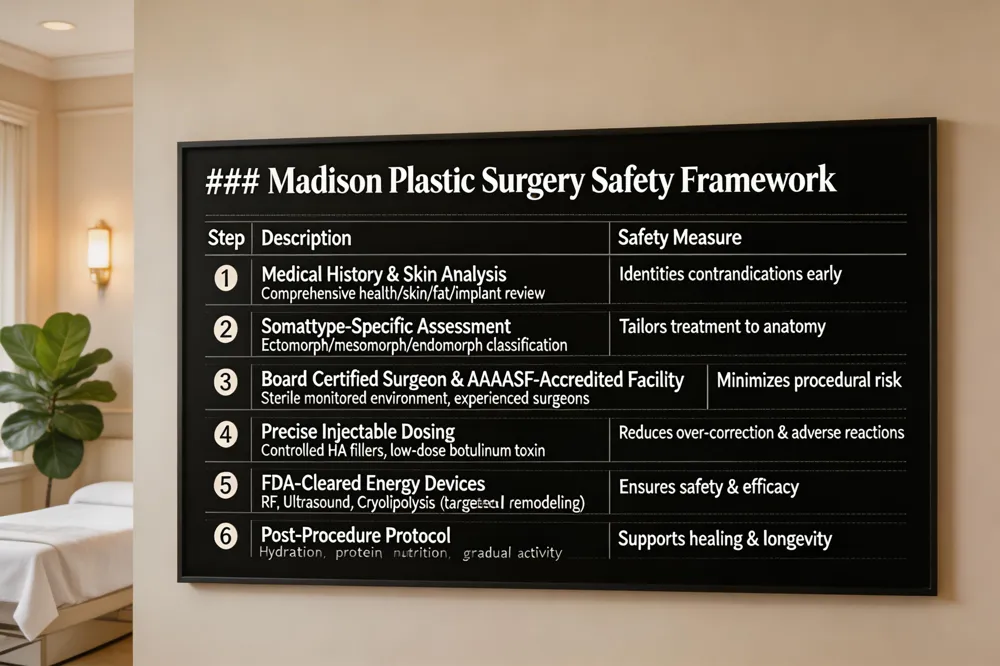 Madison Plastic Surgery distinguishes itself through an exacting, boutique‑level safety framework that begins with a comprehensive medical‑history review and detailed skin analysis. Each prospective patient undergoes a personalized assessment that evaluates skin thickness, fat distribution, metabolic rate, and any implant devices, ensuring that treatment plans are tailored to the individual’s somatotype—ectomorph, mesomorph, or endomorph. All procedures, whether surgical liposuction, a Brazilian Butt Lift, or non‑surgical RF tightening, are performed by board‑certified plastic surgeons with decades of experience, adhering to AAAASF‑accredited standards that mandate sterile environments, continuous monitoring, and rigorous pre‑operative counseling. Risk‑minimization strategies include precise dosing of injectables such as hyaluronic acid fillers or low‑dose botulinum toxin, utilization of autologous fat grafting for natural volume, and the integration of FDA‑cleared energy‑based devices (RF, ultrasound, cryolipolysis) that spare surrounding tissue. Post‑procedure protocols emphasize hydration, protein‑rich nutrition, and gradual activity resumption, further safeguarding outcomes and supporting the longevity of natural, elegant enhancements.
Non‑Surgical Body Contouring: Cost, Safety, Results, and Options Near You
Body Contouring Modalities Overview
| Modality | Cost per Session (USD) | Typical Sessions Needed | Expected Fat Reduction per Session | Safety Notes |
|---|---|---|---|---|
| CoolSculpting (Cryolipolysis) | $600‑$1,000 | 2‑4 | 20‑25 % of treated fat | Mild erythema, numbness; rare burns |
| Trusculpt (RF) | $300‑$1,200 | 2‑4 | 15‑20 % | Transient swelling; safe for most skin types |
| Emsculpt (HIFEM) | $750‑$1,000 | 2‑4 | 10‑15 % muscle gain & fat loss | Temporary muscle soreness |
| Thermage (Radiofrequency) | $1,000‑$5,000 | 1‑3 | Skin tightening, minimal fat loss | Temporary redness; low risk |
| Vanquish (RF) | $500‑$800 | 2‑4 | 15‑20 % fat reduction | Mild warmth sensation; safe |
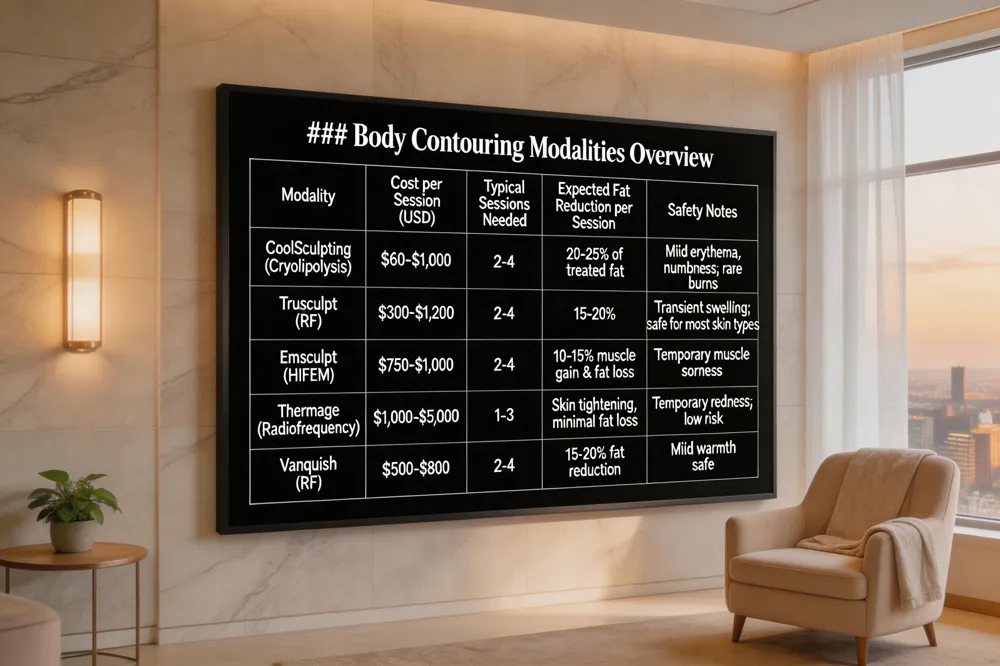 At Madison Plastic Surgery in New York City, we blend boutique expertise with FDA‑cleared, minimally invasive technologies to sculpt a natural, elegant silhouette.
How much does non‑surgical body contouring cost? Prices reflect device, treatment area and session count. CoolSculpting runs $600‑$1,000 per area per session, Trusculpt $300‑$1,200, Emsculpt $750‑$1,000, Thermage $1,000‑$5,000, and Vanquish $500‑$800. Most clients need 2‑4 sessions, so total out‑of‑pocket costs typically range from $1,500 to $6,000—far less than surgical liposuction while delivering gradual, natural‑looking results.
Is non‑surgical body contouring safe? When performed by board‑certified physicians using FDA‑cleared devices, the safety profile is excellent. Cryolipolysis , RF , ultrasound and laser target adipocytes while sparing skin, muscle and nerves. Mild, transient effects—erythema, numbness, swelling—are common; serious complications such as burns or nerve injury are rare and contraindications (e.g., pregnancy, BMI > 30, certain implants) are rigorously screened.
Non‑surgical body contouring before and after Our gallery shows 20‑25 % fat reduction per session, tighter waistlines, slimmer thighs and smoother abdomens with minimal downtime. Results become most visible 8‑12 weeks post‑treatment as the body metabolizes destroyed cells, preserving the patient’s proportions for a refined, natural look.
Non‑surgical body contouring near me Convenient Manhattan locations offer private, personalized consultations where our team assesses skin elasticity, fat distribution and lifestyle goals to craft a bespoke protocol—whether CoolSculpting, Emsculpt® , Vanquish ME™ or Exilis™.
Best non‑surgical contouring options Cryolipolysis (CoolSculpting®/Elite) delivers 20‑25 % reduction per session; laser lipolysis (SculpSure®) and RF‑ultrasound (UltraShape®) heat fat cells for comparable outcomes; injectable deoxycholic acid (Kybella®) refines submental fat. Combining modalities maximizes volume and skin tightening for an elegant, lasting transformation.
Muscle Growth and Aesthetic Preference: Mesomorph vs Endomorph
Mesomorph vs Endomorph: Training & Cosmetic Strategy
| Body Type | Muscle Gain Potential | Protein Intake (g/kg) | Training Focus | Cosmetic Approach |
|---|---|---|---|---|
| Mesomorph | Rapid hypertrophy due to efficient metabolism | 1.5‑2.2 | Moderate volume, mixed strength‑cardio | Hyaluronic‑acid fillers, RF tightening to enhance natural athletic contour |
| Endomorph | Slower gains, higher fat storage propensity | 2.0‑2.2 | Calorie‑controlled, high‑protein, periodized overload | Low‑dose botulinum toxin + targeted cryolipolysis before any volumizing procedures |
 Mesomorphs possess a naturally athletic skeleton, well‑developed muscle fibers and an efficient metabolism, making them the body type best suited for rapid hypertrophy. Their balanced protein‑to‑carbohydrate needs and ability to recover quickly allow noticeable gains with moderate training volume. Endomorphs, while capable of building muscle, face a slower metabolic rate and a propensity for fat storage; they require a calorie‑controlled, high‑protein diet (up to 2.2 g/kg) and strategically periodized resistance work that emphasizes progressive overload while minimizing excess caloric intake. In a cosmetic‑surgery context, the mesomorphic silhouette—broad shoulders, tapered waist, low subcutaneous fat—offers a refined canvas for minimally invasive enhancements such as hyaluronic‑acid fillers or radio‑frequency tightening, yielding natural‑looking volume and skin firmness. Endomorphs often benefit from combined approaches, pairing low‑dose botulinum toxin with targeted fat reduction (cryolipolysis or RF) to sculpt a sleeker profile before any volumizing procedures. Ultimately, a personalized plan that respects each somatotype’s physiology delivers the most elegant, lasting results.
Combining Surgical and Non‑Surgical Techniques for Natural Results
Integrated Enhancement Protocol
| Technique Combination | Benefits | Post‑Care Recommendations |
|---|---|---|
| Liposuction + Autologous Fat Transfer + RF Skin Tightening | Removes excess fat, adds natural volume, improves skin elasticity | Protein‑rich diet, compression garments, gentle RF maintenance every 3‑6 months |
| Surgical Butt Lift + Hyaluronic‑Acid Fillers + PRP | Enhances shape, refines contour, promotes collagen longevity | Hydration, antioxidant‑dense foods, avoid high‑impact activity for 2 weeks |
| Botox + Cryolipolysis + Lifestyle Coaching | Reduces muscle bulk, contours fat, optimizes metabolic health | Consistent HIIT, adequate sleep, stress‑reduction practices |
 Clinical data underscore the power of personalization: patient‑satisfaction rates exceed 85 % when enhancements are customized to an individual’s somatotype, skin quality, and aesthetic goals. This high satisfaction reflects not only the visual outcome but also the confidence patients report after seeing their “best self” reflected in the mirror.
Maximizing the longevity of these natural enhancements hinges on diligent post‑procedure care. A protein‑rich, antioxidant‑dense diet supports collagen synthesis, while regular low‑impact exercise maintains metabolic health and muscle tone. Compression garments after liposuction or fat transfer, adequate hydration, and a prescribed skin‑care regimen (often incorporating PRP or gentle RF maintenance) further protect results and promote optimal healing. Together, these strategies ensure that the refined, elegant outcomes endure for years to come.
Your Path to a Personalized, Natural‑Looking Enhancement
At Madison Plastic Surgery we recognize that each somatotype—ectomorph, mesomorph, or endomorph—responds uniquely to aesthetic refinement. For ectomorphs, we often integrate autologous fat grafting or hyaluronic‑acid fillers to add subtle volume without compromising their naturally lean lines. Mesomorphs benefit from balanced approaches such as targeted RF skin‑tightening combined with modest fat‑transfer to accentuate their athletic silhouette. Endomorphs typically achieve the most harmonious results through low‑dose neuromodulators, carefully placed fillers, and precision liposuction or CryShape to sculpt excess tissue while preserving skin integrity. Every plan is crafted after a thorough skin analysis, metabolic assessment, and lifestyle review, ensuring safety and longevity. Our boutique practice adheres to the highest U.S. standards—AAAASF‑accredited facilities, board‑certified surgeons, and individualized post‑procedure protocols. Experience the confidence of a natural‑looking transformation; schedule a private, one‑on‑one consultation today.